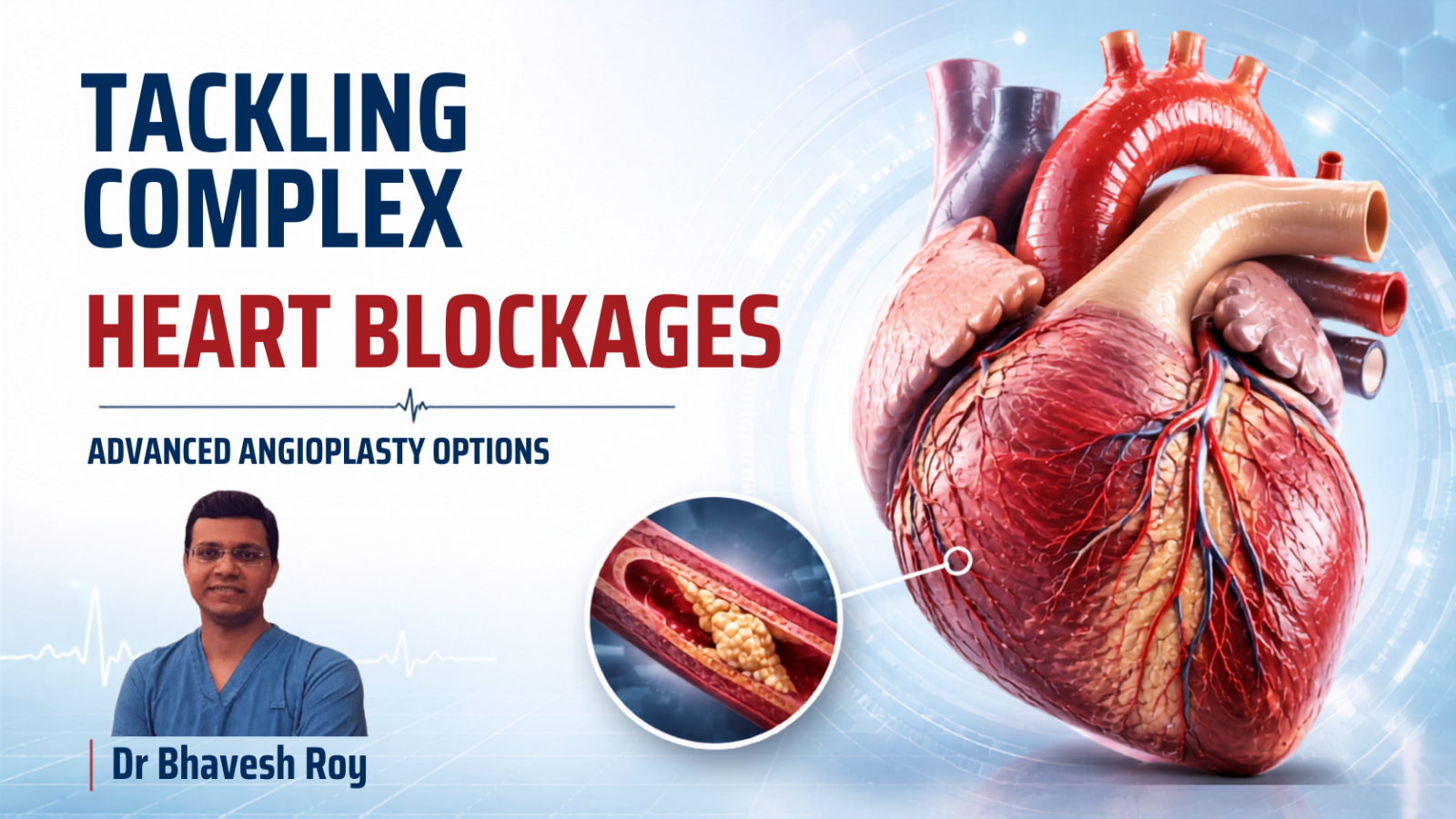
Quick Answer: What are Advanced Angioplasty Options?
Advanced angioplasty options are specialized, minimally invasive procedures used to open severely hardened or 100% blocked coronary arteries. Using cutting-edge tools like shockwave therapy (intravascular lithotripsy), diamond-tipped drills (rotablation), and high-resolution internal imaging (IVUS/OCT), cardiologists can safely deploy stents in arteries that previously required open-heart bypass surgery, ensuring faster recovery and excellent long-term blood flow.
Introduction
Have you recently been told that your coronary artery disease is “too complex” for a standard stent, or that open-heart surgery is your only option? Or perhaps you are experiencing worsening chest tightness and fatigue, wondering if modern medicine has a less invasive solution? If so, you are not alone.
Facing a severe cardiac diagnosis can be deeply unsettling. It often leaves patients and their families anxious about the risks of major surgery and long recovery times. However, the field of interventional cardiology has evolved dramatically. Today, tackling complex heart blockages: advanced angioplasty options provides a safe, highly effective alternative to traditional bypass surgery for many patients.
In this comprehensive guide, we will break down exactly what makes a heart blockage “complex” and explore the state-of-the-art technologies that make minimally invasive treatment possible. We will explore how a professional cardiology evaluation by experts like Dr. Bhavesh Roy can restore your heart’s health and give you peace of mind.
Table of Contents
- What Are Complex Heart Blockages?
- Common Symptoms of Complex Blockages
- Types and Causes of Complex Blockages
- Risk Factors for Complex Coronary Disease
- When Should You Worry About Your Symptoms?
- How Are Complex Heart Blockages Diagnosed?
- Tackling Complex Heart Blockages: Advanced Angioplasty Options
- Recovery and Prevention Tips
- Advanced Angioplasty in High-Risk Patients
- Advanced Angioplasty vs Bypass Surgery
- Frequently Asked Questions (FAQs)
- Key Takeaways
What Are Complex Heart Blockages?
Definition Box
Complex heart blockages refer to coronary artery disease characterized by heavily calcified plaque, complete 100% blockages (CTOs), or blockages located in difficult anatomical positions (like arterial branches). These lesions require specialized tools and advanced imaging to successfully treat with a stent.
Why Do They Occur?
Your heart relies on a continuous supply of oxygen-rich blood delivered by the coronary arteries. Over time, cholesterol, fat, and calcium can accumulate on the inner walls of these vessels. When this plaque hardens into a bone-like state or builds up until the vessel is completely occluded, a simple balloon cannot push it open.
How Common Are They?
They are increasingly common as the global population ages and the prevalence of diabetes rises. Up to 20-30% of patients undergoing coronary angiography are found to have complex lesions, such as Chronic Total Occlusions (CTOs).
What Does a Complex Blockage Feel Like?
Unlike a sudden heart attack, complex blockages often cause progressive symptoms. You might feel a heavy, squeezing pressure in your chest that initially only happens when you walk up a hill, but gradually starts occurring even when you are resting or walking short distances.
Are They Always Treated with Open-Heart Surgery?
No, they are not. While bypass surgery (CABG) was the gold standard for decades, modern advanced angioplasty (Complex PCI) can now safely and effectively open the vast majority of these intricate blockages from a tiny puncture in the wrist.
Common Symptoms of Complex Blockages
When your heart muscle is starved of oxygen due to a severe blockage, it sends clear distress signals. Recognizing these symptoms helps you accurately describe the events to your healthcare provider.
- Chest pain (Angina): A sensation of pressure, tightness, or a heavy weight sitting on your chest.
- Shortness of breath: Finding it unusually difficult to catch your breath, especially during exertion.
- Fatigue: Profound, unexplained exhaustion that limits your normal daily activities.
- Dizziness: Feeling lightheaded or faint due to inadequate blood circulation.
- Reduced exercise tolerance: An inability to complete workouts or physical tasks that used to be easy.
- Radiating pain: Discomfort that spreads to your jaw, neck, back, or left arm.
Symptom Checklist for Patients
If you regularly experience these changes, use this quick checklist to track your episodes before your next appointment:
- Does the chest pressure start during physical activity or emotional stress?
- Does the discomfort go away quickly when you sit down and rest?
- Are you needing to use your nitroglycerin spray more frequently?
- Do you wake up in the night feeling breathless?
- Has your ability to walk long distances decreased over the last three months?
Types and Causes of Complex Blockages
The challenges of treating complex heart disease depend entirely on the physical nature of the plaque and where it is located. We categorize these into specific clinical types.
| Type of Blockage | Primary Characteristics | Procedural Challenge |
|---|---|---|
| Chronic Total Occlusion (CTO) | 100% blocked artery for >3 months. | Standard wires cannot pass; requires specialized microcatheters. |
| Severely Calcified Lesions | Plaque hardened into bone-like calcium. | Balloons burst and stents cannot expand without drilling/shockwaves. |
| Bifurcation Lesions | Blockage at a “Y” branch of the artery. | Stenting one side can pinch off blood flow to the other side. |
| Left Main Disease | Blockage in the heart’s primary vessel. | High-risk zone; requires absolute precision and hemodynamic support. |
| Multi-Vessel Disease | Blockages in two or more major arteries. | Longer procedure time and careful strategic planning required. |
Risk Factors for Complex Coronary Disease
While anyone can develop plaque buildup, certain demographic and medical risk factors increase your vulnerability to developing heavily calcified or totally occluded arteries:
- Age: Older adults naturally accumulate more calcium in their vascular system over time.
- Diabetes: Fluctuating blood sugar dramatically accelerates arterial hardening and multi-vessel disease.
- High Blood Pressure: Chronic hypertension damages the delicate inner lining of the arteries, encouraging plaque buildup.
- Chronic Kidney Disease (CKD): Poor kidney function alters calcium metabolism, leading to severe vascular calcification.
- High Cholesterol: Elevated LDL (bad cholesterol) provides the raw material for plaque formation.
- Smoking: Tobacco use damages blood vessels and accelerates the formation of hard, stubborn blockages.
- Delayed Treatment: Ignoring mild angina for years allows soft plaque to turn into a Chronic Total Occlusion (CTO).
When Should You Worry About Your Symptoms?
For some, angina is a predictable, stable condition. However, you must be able to recognize the critical warning signs that indicate a blockage is becoming unstable and immediately life-threatening.
ARE YOUR SYMPTOMS ACCOMPANIED BY:
[ Crushing Chest Pain at Rest ] ------> YES ------> SEEK EMERGENCY CARE
[ Sudden Cold Sweats / Nausea ] ------> YES ------> CALL 108 IMMEDIATELY
[ Fainting or Loss of Consciousness ] -> YES ------> URGENT ER EVALUATION

If NO to all, but symptoms are worsening: Schedule a prompt diagnostic visit with your cardiologist.
Stable vs. Unstable Symptoms
To help you evaluate your situation, compare your symptoms using this reference table:
| Stable / Expected Symptoms | Unstable / High-Risk Symptoms |
|---|---|
| Chest tightness only during physical exertion. | Chest pain occurring while sitting or sleeping. |
| Pain resolves completely within 5 minutes of resting. | Pain lasts longer than 15-20 minutes despite resting. |
| Pain is consistently relieved by one nitroglycerin pill. | Nitroglycerin no longer provides relief. |
| Symptoms have remained the same for months. | Sudden increase in frequency, severity, or duration of pain. |
How Are Complex Heart Blockages Diagnosed?
Uncovering the precise nature of your arterial blockages requires a systematic medical approach. During your evaluation, your specialist will utilize advanced diagnostic tests.
- Coronary Angiogram: The gold standard test. A catheter is guided to the heart, and contrast dye is injected under X-ray to map out the exact location and severity of the blockages.
- Intravascular Ultrasound (IVUS): A miniature ultrasound probe placed inside the artery during an angiogram to see the plaque’s thickness and vessel size from the inside out.
- Optical Coherence Tomography (OCT): Uses near-infrared light to create microscopic, high-definition cross-sections of the artery wall, perfectly identifying calcium deposits.
- Echocardiogram: An ultrasound of the heart to evaluate how well the heart muscle is pumping and check for prior heart attack damage.
- Cardiac CT Scan: A non-invasive imaging test that can calculate a “calcium score” and visualize blockages before moving to invasive procedures.
Tackling Complex Heart Blockages: Advanced Angioplasty Options
The ideal choice for treating a severe blockage relies on the specific technology used. When standard balloons fail, interventional cardiologists deploy the following advanced modalities.
| Treatment Category | How It Works | Best Used For |
|---|---|---|
| Intravascular Lithotripsy (IVL) | Uses sonic shockwaves to safely crack deep calcium. | Heavily calcified arteries. |
| Rotational Atherectomy | A diamond-tipped burr spinning at 150,000 RPM sands away plaque. | Rock-hard calcium that prevents balloon entry. |
| CTO Microcatheters | Specialized stiff wires designed to navigate 100% blockages. | Chronic Total Occlusions. |
| Imaging-Guided PCI | Using IVUS or OCT to guide exact stent sizing and placement. | Left Main or Bifurcation lesions. |
| Drug-Eluting Stents (DES) | Scaffolds coated in medication to prevent scar tissue growth. | All complex angioplasty procedures. |
Recovery and Prevention Tips
If your cardiologist successfully opens your complex blockage, protecting that new stent is your immediate priority.
- Take your blood thinners: Dual Antiplatelet Therapy (DAPT) is strictly mandatory to prevent blood clots from forming inside the new metal stent. Never stop these without your cardiologist’s explicit permission.
- Attend Cardiac Rehabilitation: A medically supervised exercise and education program strengthens your heart and improves long-term survival.
- Control your diabetes: Keep your HbA1c levels strictly within the target range to prevent new blockages from forming.
- Lower your cholesterol: Take your prescribed statins to halt the progression of plaque in your other arteries.
- Quit smoking immediately: Tobacco use is the fastest way to ruin a successful angioplasty.
Post-Procedure Checklist
- [ ] I take my antiplatelet medications at the exact same time every day.
- [ ] I keep the catheter insertion site (wrist or groin) clean and dry.
- [ ] I avoid lifting anything over 10 pounds for the first week.
- [ ] I have scheduled my 30-day follow-up appointment.
- [ ] I have completely stopped using all nicotine products.
Advanced Angioplasty in High-Risk Patients
It is remarkably common for patients with complex blockages to also have other severe medical conditions that make open-heart surgery too dangerous. Advanced angioplasty is often a lifeline for these populations:
- The Elderly: Patients in their 80s or 90s may not survive the physical trauma and general anesthesia of a sternotomy (cracking the chest). Angioplasty via the wrist under local anesthesia is vastly safer.
- Patients with Poor Kidney Function: Open-heart surgery places immense stress on the kidneys. Advanced angioplasty can be performed using specialized techniques with very low amounts of contrast dye to protect renal function.
- Previous Bypass Patients: If old surgical bypass grafts fail years later, doing a second open-heart surgery is extremely risky. Complex angioplasty can often open the native, original arteries instead.
While these procedures are complex, they should always be discussed during an evaluation. If a surgeon has told you that you are “inoperable,” a second opinion from a complex PCI specialist is highly recommended.
Advanced Angioplasty vs Bypass Surgery
People often weigh these two options when diagnosed with severe coronary disease. Understanding the difference is highly beneficial for your proactive health management.
| Feature | Advanced Angioplasty (Complex PCI) | Bypass Surgery (CABG) |
|---|---|---|
| Core Definition | Opening the native artery from the inside using balloons, drills, and stents. | Sewing a new blood vessel around the outside of the blockage. |
| Invasiveness | Minimally invasive; accessed via a tiny puncture in the wrist or groin. | Highly invasive; requires opening the chest and stopping the heart. |
| Anesthesia | Local anesthesia with light, conscious sedation. | Deep general anesthesia required. |
| Recovery Time | Usually go home next day; full recovery in 1-2 weeks. | 5-7 days in hospital; 2-3 months for chest bone to heal. |
| Clinical Best Fit | Ideal for high-risk surgical patients, CTOs, and focal calcifications. | Still the gold standard for diabetics with diffuse multi-vessel disease. |
Frequently Asked Questions (FAQs)
1. What are complex heart blockages?
They are severe arterial blockages characterized by heavy calcification, 100% occlusion (CTOs), or difficult anatomical locations like vessel branches that resist standard balloon treatments.
2. Can complex coronary blockages be treated without surgery?
Yes. Using advanced angioplasty tools like rotablation and shockwave therapy (IVL), specialized cardiologists can now treat most complex blockages without open-heart bypass surgery.
3. What is CTO angioplasty?
It is a highly specialized procedure used to safely bore through or navigate around arteries that have been 100% blocked for months or years.
4. What is the role of IVUS in angioplasty?
Intravascular Ultrasound (IVUS) lets the doctor see inside the artery to accurately measure its size, evaluate the plaque, and ensure the stent is perfectly expanded against the vessel wall.
5. What is intravascular lithotripsy (IVL)?
It is a technology that delivers sonic shockwaves from a balloon to safely fracture rock-hard calcium deposits inside the artery, making it soft enough to stretch open with a stent.
6. How successful is advanced angioplasty?
When performed by experienced interventional cardiologists, modern success rates are excellent—often exceeding 85-90% even in highly complex CTO cases.
7. Is angioplasty safer than bypass surgery?
It is significantly less invasive, requires no general anesthesia, and has a much lower upfront risk of major surgical complications, making it safer for many high-risk or elderly patients.
8. How long does recovery take?
Most patients leave the hospital within 24 hours and can resume light, normal activities within just a few days.
9. Who is eligible for advanced angioplasty?
Patients told their blockages are too complex for regular stents, elderly patients, high-risk surgical candidates, and those who have failed previous bypass grafts.
10. Are stents permanent?
Yes, once a metal stent is deployed and locked into the artery wall, it remains there permanently to scaffold the vessel open.
11. What are the risks of angioplasty?
Risks include bleeding at the wrist or groin access site, contrast dye reactions, or, rarely, damage to the blood vessel that might require emergency surgery.
12. How can I prevent future blockages?
Strictly take your prescribed blood thinners and statins, quit smoking, manage your blood sugar, eat a heart-healthy diet, and exercise daily.
13. What is the difference between IVUS and OCT?
Both are imaging tools. IVUS uses ultrasound to see deep into the vessel wall, while OCT uses light to provide a microscopic, high-definition surface view of the plaque.
14. Can elderly patients undergo complex angioplasty?
Absolutely. Because it is minimally invasive, advanced angioplasty is frequently the treatment of choice for patients in their 80s or 90s who cannot tolerate surgery.
15. How do I know if I need advanced angioplasty?
If you have worsening chest pain, have been diagnosed with severely calcified arteries or CTOs, or were told you need bypass surgery, you should seek an evaluation from a complex PCI expert.
Key Takeaways
- Awareness vs. Disease: Progressive chest pain or breathlessness is a clear sign your heart muscle needs evaluation.
- Calcification is Treatable: Rock-hard plaque can now be safely modified using rotational atherectomy or IVL shockwaves.
- CTO Success: Arteries that have been 100% blocked for years can now be opened by specialized experts.
- Imaging is Vital: Tools like IVUS and OCT drastically reduce the chances of a stent failing in the future.
- Avoid the Scalpel: Most advanced angioplasty is done through the wrist, avoiding a painful chest incision.
- High-Risk Lifeline: Excellent alternative for elderly, diabetic, or kidney disease patients deemed too frail for bypass.
- Medication is Mandatory: Taking your blood thinners exactly as prescribed is the most important part of your recovery.
- Expert Consultation: Tackling complex heart blockages requires an interventional cardiologist specifically trained in these advanced, high-level techniques.
Conclusion
Hearing that you have complex coronary artery disease can be daunting, but understanding your minimally invasive options empowers you to make the best choice for your cardiovascular health. By utilizing cutting-edge tools and imaging, tackling complex heart blockages: advanced angioplasty options allows patients to avoid open-heart surgery, recover faster, and return to the lives they love.
However, your heart health is far too vital to leave to guesswork. If you have been diagnosed with severe blockages or are experiencing worsening symptoms, scheduling a specialized medical review is a smart, reassuring step.
Consult Dr. Bhavesh Roy for Cardiovascular Evaluation
Are you or a loved one experiencing worsening chest pain, unexplained fatigue, shortness of breath, or have you been told your blockages are too complex for standard treatment? Do not wait for symptoms to become an emergency. Contact the clinic today to schedule a comprehensive, expert evaluation with Dr. Bhavesh Roy at drbhavesh.com. Receive an accurate diagnosis and a personalized, advanced care plan designed to protect your heart and restore your quality of life.
Medical Disclaimer: The information provided in this article is for educational and informational purposes only. It does not constitute professional medical advice, diagnosis, or treatment. Always seek the advice of your physician or a qualified healthcare provider like Dr. Bhavesh Roy with any questions you may have regarding a medical condition, smoking cessation, or cardiovascular symptoms.