Quick Answer
How does smoking affect your heart valves? Smoking accelerates the deterioration of heart valves by triggering severe inflammation, oxidative stress, and endothelial damage. The toxic chemicals in tobacco smoke directly speed up calcium buildup on the valve leaflets (leading to aortic stenosis) and severely weaken the immune system, significantly increasing the risk of life-threatening valve infections like endocarditis.
Introduction
When we think about the dangers of smoking, lung cancer and clogged arteries usually come to mind first. While it is widely known that tobacco smoke severely damages the blood vessels, its destructive impact on the delicate, mechanical structures of your heart—specifically your heart valves—is frequently overlooked.
At Dr. Bhavesh Roy’s cardiology clinic, we routinely treat patients suffering from advanced heart valve disease. Every day, your heart beats over 100,000 times, and your four heart valves open and close with every single beat to keep blood flowing in the right direction. When you introduce the toxic chemicals found in cigarette smoke into your bloodstream, you place these vital structures under immense, unnatural stress.
In this comprehensive guide, we will break down the exact biological mechanisms behind how smoking damages heart valves, explore the specific valve conditions triggered by tobacco use, and discuss how quitting can alter your cardiovascular trajectory. Ultimately, understanding this connection is a crucial step in protecting your long-term heart health.
Table of Contents
- How Does Smoking Damage the Cardiovascular System?
- The Direct Impact of Smoking on Heart Valves
- Smoking and Aortic Stenosis
- Smoking and the Risk of Endocarditis
- Does Vaping Affect Heart Valves?
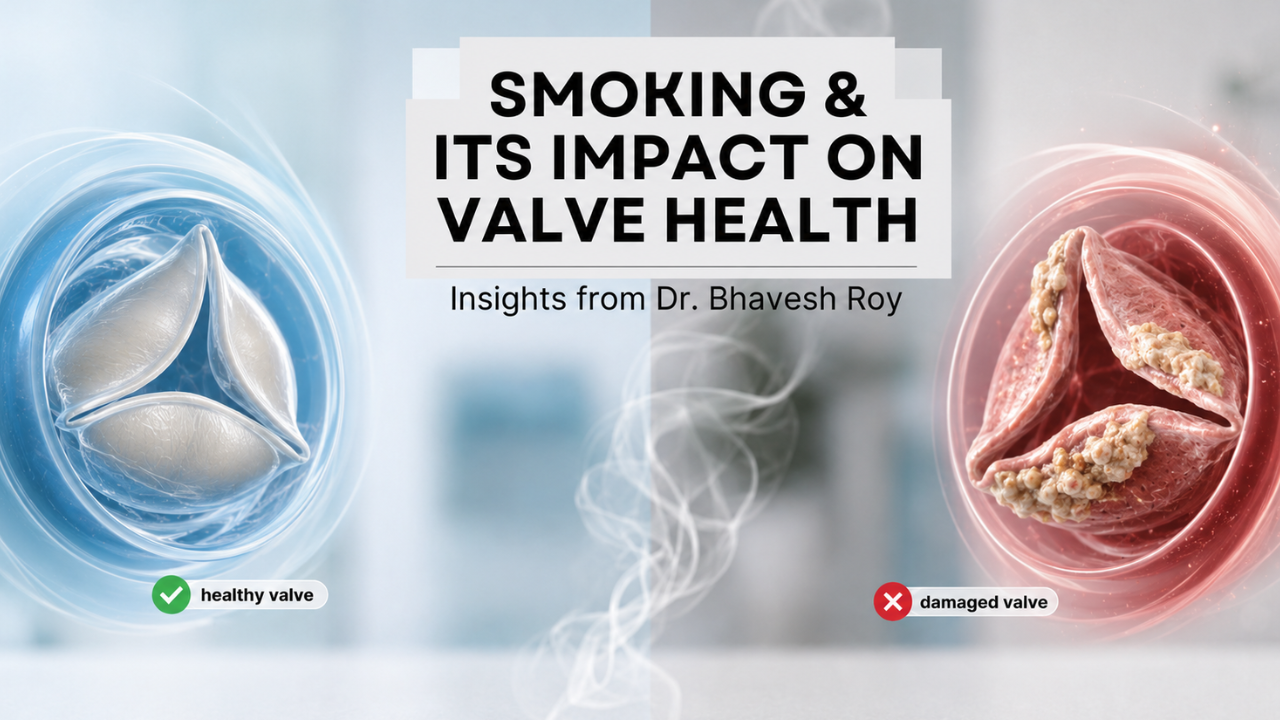
- Healthy Valve vs. Smoker’s Valve
- Can Quitting Smoking Reverse Valve Damage?
- When Should You Consult a Cardiologist?
- Frequently Asked Questions (FAQs)
- Key Takeaways
- Conclusion
How Does Smoking Damage the Cardiovascular System?
The Core Mechanism: Cigarette smoke contains over 7,000 toxic chemicals. When inhaled, these toxins enter the bloodstream and cause endothelial dysfunction—a breakdown of the smooth, protective inner lining of your blood vessels and heart valves.
This endothelial damage triggers a massive inflammatory response throughout the body. Furthermore, carbon monoxide from the smoke binds to your red blood cells, robbing your heart muscle and tissues of vital oxygen. To compensate, the heart must beat faster and pump harder, chronically elevating your blood pressure and placing immense mechanical stress on your valves.
The Direct Impact of Smoking on Heart Valves
While smoking affects the entire heart, the valves are particularly vulnerable to the chemical assault of tobacco. The damage typically manifests in three primary ways:
- Oxidative Stress: Free radicals in smoke damage the cellular structure of the valve leaflets, making them stiff and less flexible.
- Inflammation and Scarring: Chronic exposure to toxins causes the body to continuously try to heal the valves, resulting in thick, fibrotic scar tissue that prevents the valves from sealing properly.
- Thrombosis (Blood Clots): Smoking makes your blood thicker and stickier (hypercoagulable), increasing the risk of blood clots forming directly on the valve leaflets, which can break off and cause a stroke.
Smoking and Aortic Stenosis
One of the most profound links between smoking and valve disease involves the aortic valve. Aortic stenosis occurs when calcium deposits build up on the valve, causing it to narrow and stiffen. This forces the heart to work exponentially harder to push blood out to the rest of the body.
Research consistently shows that smoking is a major, independent risk factor for the rapid progression of aortic valve calcification. The inflammatory markers triggered by smoking actively promote the biological process that turns soft valve tissue into bone-like calcium deposits. Patients who smoke tend to develop severe aortic stenosis years earlier than non-smokers, frequently requiring early interventions like Transcatheter Aortic Valve Replacement (TAVR).
Smoking and the Risk of Endocarditis
Infective endocarditis is a life-threatening infection of the heart’s inner lining and valves. Smoking plays a sinister role in increasing your vulnerability to this condition.
- Weakened Immune System: Smoking suppresses your body’s natural immune defenses, making it much harder to fight off bacterial infections.
- Oral Health Decline: Smoking heavily contributes to periodontal (gum) disease. Bacteria from infected gums can easily enter the bloodstream during eating or brushing.
- Bacterial Adhesion: Because smoking damages the smooth endothelial lining of the heart valves, it creates rough, microscopic tears. When circulating bacteria reach the heart, they latch onto these rough patches and rapidly multiply, physically destroying the valve tissue.
Does Vaping Affect Heart Valves?
Many patients switch to e-cigarettes or vaping under the misconception that it is completely safe for the heart. While vaping eliminates tar, e-cigarette aerosol still delivers highly concentrated nicotine, ultrafine particles, and volatile organic compounds into the bloodstream.
Nicotine alone causes massive spikes in adrenaline, elevating heart rate and blood pressure, which places mechanical wear and tear on the valves. Additionally, recent cardiological studies indicate that the chemicals in vape liquids induce significant oxidative stress and endothelial damage, laying the exact same groundwork for future valve deterioration as traditional cigarettes.
Healthy Valve vs. Smoker’s Valve
Understanding the physical differences helps illustrate the severity of tobacco’s impact on your heart.
| Feature | Healthy Heart Valve | Smoker’s Heart Valve |
|---|---|---|
| Leaflet Texture | Thin, smooth, and highly flexible. | Thickened, rigid, and scarred. |
| Calcification | Minimal to no calcium buildup. | Accelerated, heavy, bone-like calcium deposits. |
| Endothelial Lining | Intact, repelling blood clots and bacteria. | Damaged and rough, prone to bacterial infections and clots. |
| Valve Function | Opens fully and seals completely tight. | Struggles to open (stenosis) or leaks backward (regurgitation). |
Can Quitting Smoking Reverse Valve Damage?
This is a question we hear frequently at the clinic. The honest answer requires nuance. Structural damage, such as heavy calcification or fibrotic scarring on the valve, cannot be reversed simply by quitting. Once a valve becomes severely stenotic, it will eventually require mechanical or surgical intervention.
However, quitting smoking is the single most powerful step you can take to halt the progression of the disease. Within just a few weeks of quitting, your blood becomes less sticky, reducing your risk of valve-related blood clots. Within months, your systemic inflammation plummets, and your endothelial function begins to heal, drastically lowering your risk of endocarditis and slowing the rate of further calcium buildup.
When Should You Consult a Cardiologist?
If you are a current or former smoker, you must remain vigilant about monitoring your cardiovascular health. Do not ignore the early warning signs of a failing heart valve. Schedule an evaluation with Dr. Bhavesh Roy if you experience:
- Unexplained shortness of breath, especially when lying flat or during mild exertion.
- A noticeable decline in your physical stamina or chronic fatigue.
- Chest tightness, pressure, or pain.
- Dizziness, lightheadedness, or sudden fainting spells.
- A fluttering, racing, or irregular heartbeat (palpitations).
- Swelling in your ankles, feet, or abdomen.
Frequently Asked Questions (FAQs)
1. Does smoking directly cause heart valve disease?
While smoking may not be the sole cause of valve disease in every patient, it is a massive catalyst. It directly accelerates the biological processes—like inflammation and calcification—that destroy valve tissue over time.
2. Can smoking make existing aortic stenosis worse?
Absolutely. If you have been diagnosed with mild or moderate aortic stenosis, smoking will rapidly accelerate the calcium buildup, pushing you toward severe stenosis and the need for a valve replacement much faster.
3. How does smoking lead to heart valve infections?
Smoking severely damages your gums (creating an entryway for bacteria), weakens your immune system, and roughs up the smooth lining of your heart valves. This combination makes it incredibly easy for bacteria to travel to your heart and infect the valves (endocarditis).
4. Is vaping safe for patients with heart valve issues?
No. Vaping delivers high doses of nicotine and chemical aerosols that raise blood pressure, increase heart rate, and damage the endothelial lining of the blood vessels and valves. It is not considered safe for cardiovascular health.
5. If my valve is already damaged by smoking, what are my treatment options?
If the valve damage is severe, modern cardiology offers excellent, minimally invasive treatments. Procedures like Transcatheter Aortic Valve Replacement (TAVR) allow experts like Dr. Bhavesh Roy to replace a failing, calcified valve without requiring traditional open-heart surgery.
Key Takeaways
- Smoking introduces thousands of toxins into the bloodstream, causing systemic inflammation and endothelial damage to the heart valves.
- Tobacco use aggressively accelerates calcium buildup on the aortic valve, leading to early and severe aortic stenosis.
- Smokers are at a significantly higher risk of developing infective endocarditis due to weakened immunity and damaged valve linings.
- Vaping is not a safe alternative, as nicotine and aerosols still cause elevated blood pressure and vascular damage.
- Quitting smoking cannot reverse existing structural calcification, but it immediately halts the rapid progression of the disease and lowers the risk of blood clots.
- Current and former smokers should undergo routine echocardiograms to monitor valve function before severe symptoms appear.
Conclusion
The impact of smoking on heart valve health is devastating, silent, and progressive. Every cigarette smoked contributes to the stiffening, scarring, and deterioration of the precise mechanical flaps that keep your heart pumping efficiently. Ultimately, recognizing this hidden danger is the first step toward taking control of your cardiovascular future. Quitting smoking is the most profound gift you can give your heart, halting further damage and dramatically improving your long-term prognosis.
Consult Dr. Bhavesh Roy for Cardiovascular Evaluation
Are you a current or former smoker experiencing shortness of breath, unexplained fatigue, or chest discomfort? Do not wait for a minor issue to become a cardiac emergency. Contact Dr. Bhavesh Roy today for a comprehensive cardiovascular evaluation. As a leading expert in interventional cardiology and structural heart disease, Dr. Bhavesh Roy utilizes state-of-the-art echocardiography to assess your valve health and provides cutting-edge treatments like TAVR. Schedule your consultation at drbhavesh.com.
Medical Disclaimer: The information provided in this article is for educational and informational purposes only. It does not constitute professional medical advice, diagnosis, or treatment. Always seek the advice of your physician or a qualified healthcare provider like Dr. Bhavesh Roy with any questions you may have regarding a medical condition, smoking cessation, or cardiovascular symptoms.