Quick Summary
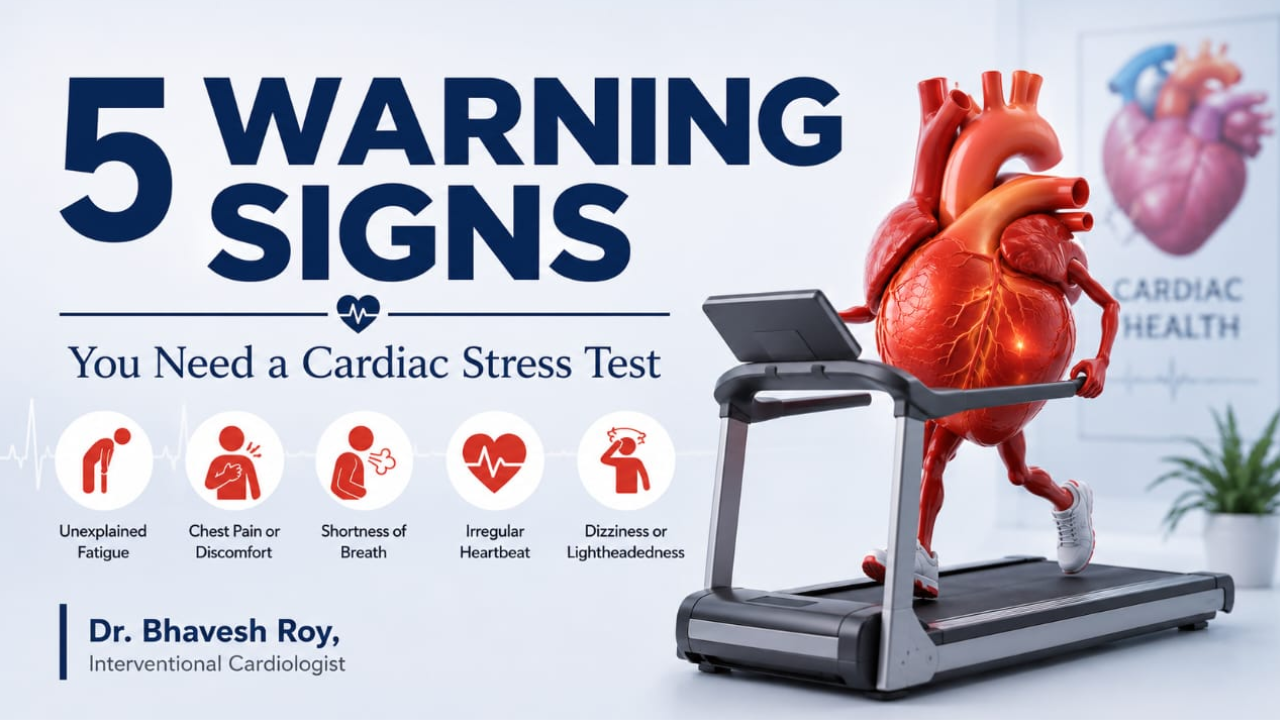
Your heart might seem perfectly fine while you rest. However, physical exertion changes everything. Specifically, exercise forces your heart to pump harder and faster. Consequently, hidden blockages often reveal themselves during physical activity. A cardiac stress test safely measures how well your heart handles this exact workload. Therefore, doctors use it to catch heart disease early. But how do you know if you need one? Read on to discover the five critical warning signs you must never ignore.
Introduction: The Hidden Dangers of Heart Disease
Many patients feel completely healthy while sitting on the couch. However, their arteries might secretly harbour dangerous blockages. Specifically, a resting heart requires very little oxygen. Therefore, narrowed arteries can still supply enough blood to keep you comfortable. But, everything changes when you climb a flight of stairs or run for a bus.
During exertion, your heart demands significantly more oxygen-rich blood. Consequently, if your arteries are blocked, your heart muscle starves. This starvation triggers warning signs of heart disease like chest pain and fatigue. Ultimately, a cardiac stress test (often called a Treadmill Test or TMT) simulates this physical stress safely in a clinic. By monitoring you closely, we can identify hidden heart disease before a fatal heart attack occurs.
Therefore, you must listen to your body carefully. Below, we discuss five major warning signs that indicate you need a cardiovascular evaluation immediately.
Table of Contents
- Sign 1: Unexplained Shortness of Breath
- Sign 2: Chest Tightness or Discomfort
- Sign 3: Strong Family History of Heart Disease
- Sign 4: Sudden Dizziness or Fainting Spells
- Sign 5: A Sudden Drop in Stamina
- Conclusion & Next Steps
Sign 1: Unexplained Shortness of Breath
First, pay close attention to your breathing patterns. Normally, you breathe heavily after an intense workout. However, you should not feel breathless after walking a short distance. Furthermore, struggling to catch your breath while carrying light groceries is a major red flag.
Specifically, this unexplained shortness of breath occurs when your heart struggles to pump efficiently. Consequently, fluid can back up into your lungs. Therefore, a stress test helps determine if a weak heart muscle causes your breathing difficulties.
Sign 2: Chest Tightness or Discomfort
Next, never ignore chest tightness. Doctors refer to exercise-induced chest pain as angina. Often, patients describe it as a heavy pressure, squeezing, or burning sensation. Furthermore, this discomfort usually vanishes the moment you stop moving and rest.
Consequently, many people mistakenly dismiss it as simple indigestion or muscle strain. However, it strongly suggests that your coronary arteries are narrowing. Therefore, you absolutely need a cardiac stress test to map out these potential blockages.
Sign 3: Strong Family History of Heart Disease
Third, you must evaluate your genetics honestly. Unfortunately, heart disease frequently runs in families. For instance, perhaps your father or brother suffered an early heart attack. If so, your personal cardiovascular risk jumps significantly.
Furthermore, genetic cholesterol issues can silently clog your arteries at a young age. Therefore, even if you feel fine, a proactive stress test remains a wise decision. Ultimately, early detection provides the best defence against your family history.
Sign 4: Sudden Dizziness or Fainting Spells
Additionally, watch out for unexplained dizzy spells. Perhaps you feel incredibly lightheaded or faint during a brisk walk. Specifically, this happens when your heart fails to pump enough blood up to your brain.
Consequently, dizziness during physical activity signals a potential drop in blood pressure. Alternatively, it might indicate a dangerous, irregular heart rhythm. Therefore, we use a cardiac stress test to monitor your heart’s electrical signals safely while you exercise.
Sign 5: A Sudden Drop in Stamina
Finally, track your daily energy levels and stamina. Perhaps you used to walk two miles every morning without issue. Now, you suddenly struggle to finish half a mile. Furthermore, you might feel completely exhausted after doing minor household chores.
Consequently, this rapid, unexplained fatigue requires immediate medical investigation. It often indicates that your heart simply cannot meet your body’s energy demands. Therefore, a Treadmill Test will clearly reveal exactly where your cardiovascular limits lie.
Conclusion & Next Steps
In conclusion, your heart sends clear distress signals when it struggles. Indeed, warning signs of heart disease like chest tightness and unexplained shortness of breath are not just signs of aging. Rather, they are urgent warnings. Therefore, you must act quickly to prevent permanent heart muscle damage.
Do not wait for a massive medical emergency to strike. Instead, prioritize your long-term cardiovascular health today. If you experience any of these five warning signs, you need expert medical guidance.
Consult Dr. Bhavesh Roy Today
Are you concerned about your heart health or experiencing unusual symptoms? If so, schedule a comprehensive evaluation with Dr. Bhavesh Roy. Together, we can perform a safe, accurate cardiac stress test in our advanced clinic. Ultimately, early diagnosis empowers you to live a longer, healthier life.
Medical Disclaimer: Please note, this article provides educational information only. It does not replace formal medical advice or diagnosis. Always consult a qualified cardiologist regarding your specific symptoms. Furthermore, seek immediate emergency care if you experience severe, crushing chest pain or sudden fainting.