Quick Summary
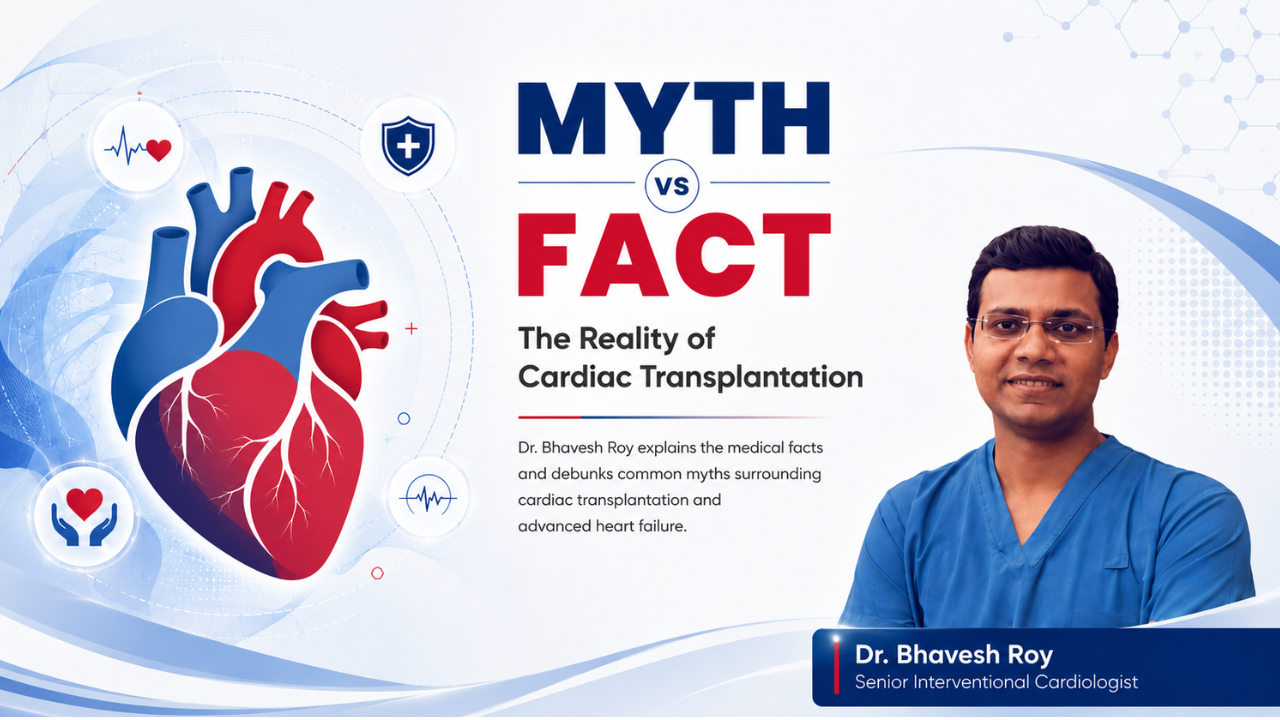
Many people hold dangerous misconceptions about cardiac transplantation. First, it is not a magical, instant cure. Instead, it remains a complex treatment for severe heart failure. Consequently, patients must commit to lifelong medical care. Therefore, understanding the clinical reality helps patients prepare adequately. Read on to separate actual transplant facts from popular fiction.
Introduction: Demystifying the Process
Movies often dramatizes the entire heart transplant process extensively. Consequently, dangerous myths spread among anxious patients very easily. However, modern cardiology offers incredible, science-backed survival rates continually. Specifically, a new heart provides a brilliant second chance.
Therefore, Dr. Bhavesh Roy wants to clear the confusion. Furthermore, setting proper expectations improves your overall recovery. Below, we debunk common myths surrounding cardiac transplantation systematically.
Table of Contents
- Myth 1: A Heart Transplant is a Permanent Cure
- Myth 2: You Cannot Live a Normal Life
- Myth 3: Age Completely Disqualifies You
- Myth 4: You Will Get a Heart Immediately
- Frequently Asked Questions
Myth 1: A Heart Transplant is a Permanent Cure
Fact 1: It is a Lifelong Medical Commitment
Many desperate patients believe a new heart completely cures them forever. However, cardiac transplantation actually trades one serious condition for another. Specifically, you trade terminal heart failure for lifelong post-transplant care. Consequently, you must take strict immunosuppressant medications every single day. Therefore, your body will not actively reject the newly implanted organ. Furthermore, you can never miss a single dose of these critical drugs. Specifically, your immune system views the new heart as a dangerous invader constantly.
Consequently, these powerful drugs intentionally weaken your natural immune defenses continuously. Therefore, you become highly susceptible to everyday viruses and bacterial infections. Furthermore, you must practice extreme hygiene and avoid sick individuals entirely. Specifically, you must thoroughly wash all raw fruits and vegetables before eating. Additionally, you must attend frequent medical checkups and rigorous clinical testing constantly. Specifically, doctors perform routine endomyocardial biopsies to check your cellular tissue health.
Next, you must monitor your blood pressure and daily weight meticulously. Furthermore, you will undergo regular blood tests indefinitely to check kidney function. Consequently, these medications can sometimes cause secondary issues like high blood sugar. Therefore, you must manage your overall systemic health with extreme dedication. Ultimately, this strict daily regimen becomes your new permanent normal permanently. Consequently, the surgery marks the beginning of your healthcare journey, not the end.
Myth 2: You Cannot Live a Normal Life
Fact 2: Recipients Often Resume Active Lifestyles
Some terrified patients fear they will remain bedridden forever after surgery. Fortunately, this popular myth is entirely false and completely unfounded. Specifically, most successful recipients return to highly active, fulfilling lives quickly. First, you will complete a structured cardiac rehabilitation program under strict supervision. Consequently, this guided exercise strengthens your new cardiac muscle safely and effectively. Furthermore, physical therapists gradually increase your cardiovascular endurance over several crucial months.
Specifically, many determined patients eventually resume working and traveling normally again. Additionally, you can enjoy rigorous hobbies, hiking, and recreational sports safely. Therefore, your overall quality of life improves drastically compared to your previous illness. Next, proper cardiovascular nutrition fuels your incredible physical recovery completely. Specifically, you must consume a strict low-sodium, heart-healthy diet daily. Consequently, this prevents unnecessary fluid retention and protects your new blood vessels.
Furthermore, managing your emotional health remains just as important as physical training. Specifically, many patients experience profound gratitude mixed with unexpected survivor guilt. Therefore, joining dedicated transplant support groups provides immense psychological relief. Ultimately, a successful heart transplant dramatically restores your daily energy and vitality. Consequently, you can actively participate in family events and milestone celebrations again. Therefore, the ultimate goal always remains returning you to a thriving, independent lifestyle.
Myth 3: Age Completely Disqualifies You
Fact 3: Biological Fitness Matters More Than Age
Older patients often assume they are ineligible for surgery immediately. However, chronological age is just one single clinical factor considered today. Specifically, specialized doctors evaluate your overall physical health meticulously during selection. First, specialists assess your kidney and liver function thoroughly via extensive testing. Furthermore, they test your lungs directly for adequate oxygen exchange capacity. Consequently, your major internal organs must function well enough to survive surgery.
Specifically, healthy individuals in their late sixties often qualify for new hearts. Therefore, severe physical frailty disqualifies a patient, not just their advanced age. Furthermore, doctors perform rigorous cardiopulmonary exercise testing to measure your true stamina. Additionally, strong family support systems improve your surgical candidacy significantly. Specifically, you need dedicated caregivers to assist during your intense early recovery phase. Consequently, social workers evaluate your home environment and financial stability thoroughly.
Furthermore, doctors screen you meticulously for any underlying cancers or active infections. Specifically, a history of recent severe cancer usually prevents transplant eligibility entirely. Therefore, your physiological fitness matters far more than your simple birthdate. Next, you must demonstrate absolute willingness to follow complex medical instructions flawlessly. Ultimately, the evaluation process ensures the precious organ goes to a capable recipient. Therefore, you should never disqualify yourself without a thorough, professional medical consultation.
Myth 4: You Will Get a Heart Immediately
Fact 4: The Waiting List is Highly Complex
Securing a perfect donor heart requires immense patience and mental fortitude. First, organ matches depend heavily on exact blood type and specific body size. Furthermore, doctors prioritize waiting patients based on objective medical urgency strictly. Consequently, some critically ill individuals wait many months or even several years. Therefore, managing your current progressive heart failure remains absolutely critical daily. Specifically, you might require continuous intravenous medications administered directly at home.
Next, advanced mechanical devices can pump your blood safely during this wait. Doctors call these powerful machines ventricular assist devices, or VADs. Consequently, these mechanical pumps keep you alive while you wait for a donor. Furthermore, you must carry external batteries to power these internal pumps constantly. Specifically, this represents a bridge therapy designed to extend your survival time safely. Therefore, you must remain incredibly resilient during this highly unpredictable waiting period.
Furthermore, donor organs remain incredibly scarce across the entire global medical system. Specifically, an organ must arrive at the hospital within four short hours. Doctors call this critical time window the cold ischemic time limit strictly. Consequently, logistics and transportation play massive roles in successful organ procurement daily. Ultimately, this rigid matching process ensures the highest possible transplant success rate. Therefore, you must maintain your physical strength while waiting for the life-saving call.
Frequently Asked Questions
- How long does a transplant surgery take?
Typically, the intense surgery lasts four to six hours. Consequently, it requires a highly skilled, multidisciplinary surgical team. Furthermore, surgeons must connect major blood vessels perfectly. - Can a transplanted heart get coronary artery disease?
Yes, absolutely. Specifically, transplant coronary artery disease develops slightly differently. Consequently, it narrows the vessels silently over time. Therefore, strict diet and daily exercise remain incredibly important. - Does the new heart beat at a normal rate?
Interestingly, a donor heart beats slightly faster initially. Specifically, it lacks direct nerve connections to your brain. Consequently, your resting heart rate stays around 100 beats. Furthermore, it requires longer warm-up periods before exercise. - Who manages my care after surgery?
First, a dedicated transplant team monitors you closely for life. Next, your regular cardiologist handles your routine cardiovascular maintenance. Therefore, coordinated teamwork ensures your ongoing medical safety.
In conclusion, cardiac transplantation represents a truly profound modern medical miracle. However, it requires intense personal dedication and lifelong medical compliance constantly. Specifically, separating actual fact from fictional myths empowers you completely. Furthermore, proper medical education eliminates unnecessary anxiety before your major surgery. Therefore, never let unfounded fear stop you from seeking advanced medical help.
Ultimately, a new heart offers precious, extended years with your beloved family. Consequently, this highly challenging medical journey provides an incredibly rewarding outcome ultimately. Furthermore, it highlights the beautiful, selfless miracle of human organ donation perfectly. Therefore, we highly encourage everyone to register as an official organ donor today. Ultimately, your single selfless decision could save multiple desperate lives in the future.
Consult Dr. Bhavesh Roy Today
Are you battling advanced progressive heart failure currently? If so, schedule a comprehensive cardiovascular evaluation today without any further delay. Specifically, Dr. Bhavesh Roy specializes in managing severe, life-threatening cardiac conditions daily. Furthermore, he offers highly compassionate, evidence-based care for every single patient. Together, we will actively explore every available advanced treatment for your failing heart.
Please note, this article provides educational information only. It never replaces professional medical advice, diagnosis, or treatment. Always follow the specific advice of your treating cardiologist. Furthermore, seek immediate emergency medical attention for severe chest pain, shortness of breath, or sudden fainting.