Quick Summary
First, understanding treatments for coronary artery disease remains absolutely vital today. Specifically, standard angioplasty treats soft cholesterol blockages perfectly well. However, severe calcium buildup requires highly advanced medical techniques. Consequently, cardiologists use rotablation to drill through rock-hard plaque safely. Therefore, knowing these exact differences empowers your personal healthcare choices. Furthermore, modern technology offers multiple ways to clear clogged vessels. Ultimately, proper medical treatment restores healthy blood flow safely.
Introduction
Many patients develop severe arterial blockages over several decades. First, soft cholesterol plaques form inside your blood vessels slowly. Next, these soft plaques calcify and harden over many years. Consequently, intense calcium buildup makes your flexible arteries incredibly stiff. Therefore, treating these calcified lesions becomes extremely difficult for doctors.
Furthermore, hardened plaque restricts vital blood flow to your heart. Ultimately, this severe restriction causes dangerous chest pain and fatigue. Specifically, standard balloons simply cannot break this hardened calcium shell. Consequently, doctors need highly specialized tools to clear the pathway.
First, angioplasty remains the absolute standard treatment globally today. Specifically, doctors use tiny balloons to open narrowed arteries safely. However, heavily calcified arteries resist these standard balloons completely. Consequently, normal balloons can actually burst during the inflation process.
Therefore, Dr. Bhavesh Roy utilizes rotablation highly safely. Next, this advanced drill clears the hardest plaque efficiently. Furthermore, this procedure prepares the artery for successful stent placement. Ultimately, understanding these specific procedures eliminates unnecessary medical anxiety completely.
Table of Contents
- Understanding Coronary Artery Disease
- What is Angioplasty?
- What is Rotational Atherectomy?
- What is Orbital Atherectomy?
- Rotablation vs Angioplasty: Key Differences
- Preparing for Your Cardiac Procedure
- Recovery After the Procedures
- Long-Term Lifestyle Changes
- Frequently Asked Questions
- Conclusion
Understanding Coronary Artery Disease
First, your heart requires a constant supply of oxygen-rich blood. Specifically, coronary arteries deliver this vital blood to heart muscles. However, unhealthy lifestyle choices damage these delicate arteries over time. Consequently, fatty deposits begin accumulating along the inner arterial walls.
Therefore, this dangerous accumulation creates severe blockages eventually. Furthermore, doctors call this progressive condition coronary artery disease clinically. Next, these soft blockages slowly harden into severe calcium deposits. Consequently, calcium buildup transforms healthy arteries into rigid, narrow pipes. Ultimately, this dangerous rigidity severely limits your daily physical activities.
What is Angioplasty?
First, angioplasty is a highly effective, minimally invasive cardiac procedure. Specifically, a cardiologist inserts a tiny balloon into your artery. Next, they guide this balloon directly into the blocked area. Consequently, they inflate the balloon rapidly and firmly inside.
Therefore, this specific action crushes the soft plaque outward. Furthermore, it compresses the fatty buildup against the artery walls. Next, fresh blood flows freely through the opened vessel again. Consequently, this provides immediate relief from severe chest pain symptoms.
Furthermore, doctors usually place a metal stent inside immediately. Specifically, this tiny mesh tube acts as a permanent scaffold. Consequently, it keeps the delicate blood vessel open indefinitely. Ultimately, this standard procedure treats most common blockages flawlessly.
What is Rotational Atherectomy?
Sometimes, arterial plaque becomes rock-hard over many long years. Therefore, a standard balloon cannot expand properly inside the vessel. Consequently, doctors perform rotablation before placing a permanent stent.
First, doctors also call this procedure rotational atherectomy medically. Specifically, they utilize a highly specialized tool called a rotablator. Next, they guide this tiny diamond-coated burr into the artery. Consequently, this microscopic drill spins at incredibly high speeds safely.
Furthermore, it grinds the hard calcium into microscopic particles efficiently. Ultimately, your natural bloodstream washes these harmless particles away safely. Therefore, the rotablator smooths the arterial walls perfectly for stenting. Consequently, the subsequent stent expands fully and functions completely normally.
What is Orbital Atherectomy?
Additionally, another highly advanced technique exists in modern cardiology today. Specifically, this procedure utilizes a completely different type of atherectomy device. Doctors call this innovative technique orbital atherectomy clinically.
First, orbital atherectomy uses a specialized eccentrically rotating diamond crown. Next, this unique crown orbits the artery in sweeping circles. Consequently, the orbital tool modifies severe calcium very efficiently. Furthermore, it sands down the hardened calcium in larger vessels.
Therefore, cardiologists choose the exact tool fitting your specific anatomy. Specifically, some arteries respond better to orbital sanding than drilling. Ultimately, both advanced techniques clear the arterial path perfectly. Consequently, they both prepare the rigid vessel for safe stenting.
Rotablation vs Angioplasty: Key Differences
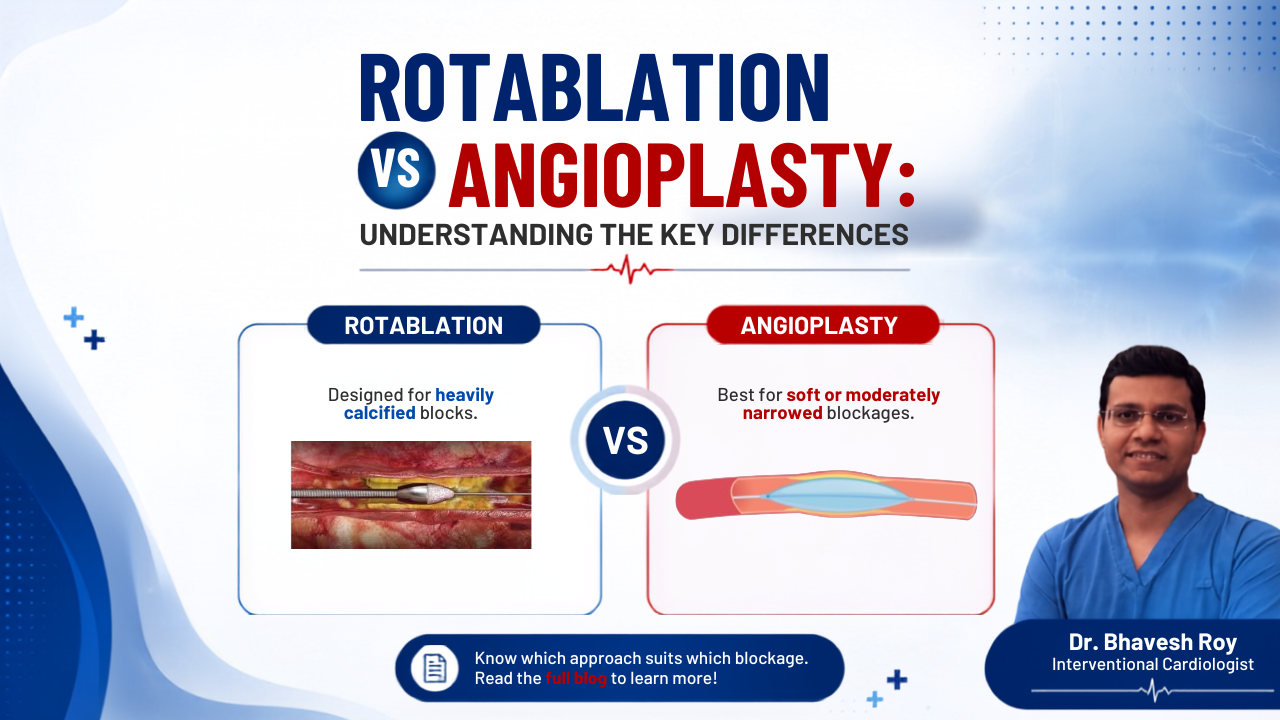
First, comparing these two procedures reveals their distinct medical purposes. Specifically, angioplasty focuses entirely on displacing soft, squishy plaque. Consequently, it relies purely on high-pressure outward balloon force.
However, rotational atherectomy actually removes the hardened plaque physically. Therefore, drilling physically alters the structural makeup of the blockage. Furthermore, drilling takes slightly more time than simple balloon inflation. Next, drilling requires advanced training and specialized equipment from doctors.
| Feature | Standard Angioplasty | Rotational Atherectomy |
|---|---|---|
| Primary Target | Soft, cholesterol-based plaque | Hard, calcified plaque |
| Tool Used | Inflatable expanding balloon | Diamond-coated spinning burr |
| Primary Mechanism | Crushes plaque against walls | Grinds plaque into tiny particles |
| Procedure Time | Shorter overall duration | Slightly longer duration |
| Stent Required? | Yes, almost always | Yes, immediately after drilling |
Preparing for Your Cardiac Procedure
First, proper preparation ensures a highly successful surgical outcome. Specifically, you must undergo comprehensive blood tests and imaging beforehand. Next, your cardiologist will review your daily medications thoroughly. Consequently, you might need to adjust your blood thinners temporarily.
Therefore, always follow your doctor’s exact pre-operative medication instructions. Furthermore, you must fast completely for several hours before surgery. Ultimately, this fasting prevents dangerous complications during the conscious sedation. Additionally, you should arrange reliable transportation home after the procedure.
Recovery After the Procedures
First, both procedures require very similar recovery times generally. Specifically, patients stay in the hospital overnight for close observation. Next, you must rest your specific insertion site carefully. Consequently, keeping your leg or arm straight prevents bleeding complications.
Therefore, most people return to light work within one week. Furthermore, the overall physical downtime remains very minimal for patients. However, strict medication adherence remains absolutely critical post-surgery. Specifically, you must take prescribed blood thinners every single day.
Consequently, this prevents dangerous clots inside your new metal stent. Therefore, you can never skip these specific vital medications abruptly. Ultimately, proper medical compliance ensures your long-term cardiovascular success. Furthermore, attending your scheduled follow-up appointments tracks your ongoing recovery.
Long-Term Lifestyle Changes
First, treating the blockage does not cure the underlying disease. Specifically, coronary artery disease requires lifelong management and strict discipline. Consequently, proper diet and daily exercise prevent future blockages entirely. Therefore, you must adopt a strict, heart-healthy nutritional plan immediately.
Furthermore, removing saturated fats and excess sodium lowers your risks. Next, engaging in daily cardiovascular exercise strengthens your heart muscle. Consequently, brisk walking or swimming improves your overall blood circulation. Ultimately, quitting smoking entirely remains the most critical lifestyle change.
Therefore, you must actively protect your newly opened blood vessels. Specifically, managing your daily stress levels also improves heart health. Consequently, practicing meditation or deep breathing exercises lowers blood pressure. Ultimately, a holistic approach keeps your entire cardiovascular system healthy.
Frequently Asked Questions
- 1. Is rotablation safe?
- Yes, it is highly safe and extremely effective today. Specifically, experienced cardiologists perform it using advanced live X-ray imaging.
- 2. Do I need a stent after rotablation?
- Yes, absolutely. First, the high-speed drill clears the hard calcium. Next, a stent keeps the artery open permanently.
- 3. Is the procedure painful?
- No, you receive local anesthesia and mild conscious sedation. Consequently, you remain completely comfortable throughout the entire procedure.
- 4. How does orbital atherectomy differ?
- First, orbital atherectomy uses a different rotating crown. Specifically, it orbits eccentrically to treat calcified plaque uniquely.
- 5. What exactly is an atherectomy device?
- Specifically, it is a specialized tool that physically removes plaque. Consequently, it shaves, grinds, or vaporizes blockages inside the artery.
- 6. How long does rotablation take?
- First, it takes slightly longer than standard angioplasty. Specifically, expect the entire procedure to last one to two hours.
- 7. Can the severe calcium buildup return?
- Yes, unfortunately, new plaque can accumulate over time. Consequently, taking your medications and changing your lifestyle remains vital.
- 8. Will I be awake during the procedure?
- Yes, you remain awake but heavily relaxed and sedated. Therefore, you can follow simple instructions from your operating doctor.
- 9. What is a rotablator exactly?
- Specifically, it is a tiny, diamond-coated burr. Consequently, it spins rapidly to grind away rock-hard arterial calcification.
Conclusion
First, both procedures save countless human lives every single day. Specifically, standard angioplasty treats softer blockages incredibly well. However, rotational atherectomy handles severe arterial calcification very safely. Consequently, your cardiologist chooses the best tool for your anatomy.
Therefore, you receive highly customized, incredibly effective cardiac care. Furthermore, early diagnosis prevents massive heart attacks entirely. Ultimately, a thorough medical evaluation determines your exact treatment needs. Therefore, never ignore sudden chest pain or severe shortness of breath.
Consult Dr. Bhavesh Roy Today
Dr. Bhavesh Roy is a highly experienced Interventional Cardiologist today. Specifically, he specializes in complex coronary interventions like rotablation and orbital atherectomy. Furthermore, he provides evidence-based, compassionate care for every single patient. Therefore, schedule your comprehensive cardiac evaluation safely today.
This article provides educational information only. Specifically, it never replaces professional medical advice, diagnosis, or treatment. Always consult a qualified cardiologist regarding your specific symptoms. Furthermore, seek immediate emergency care for severe chest pain.