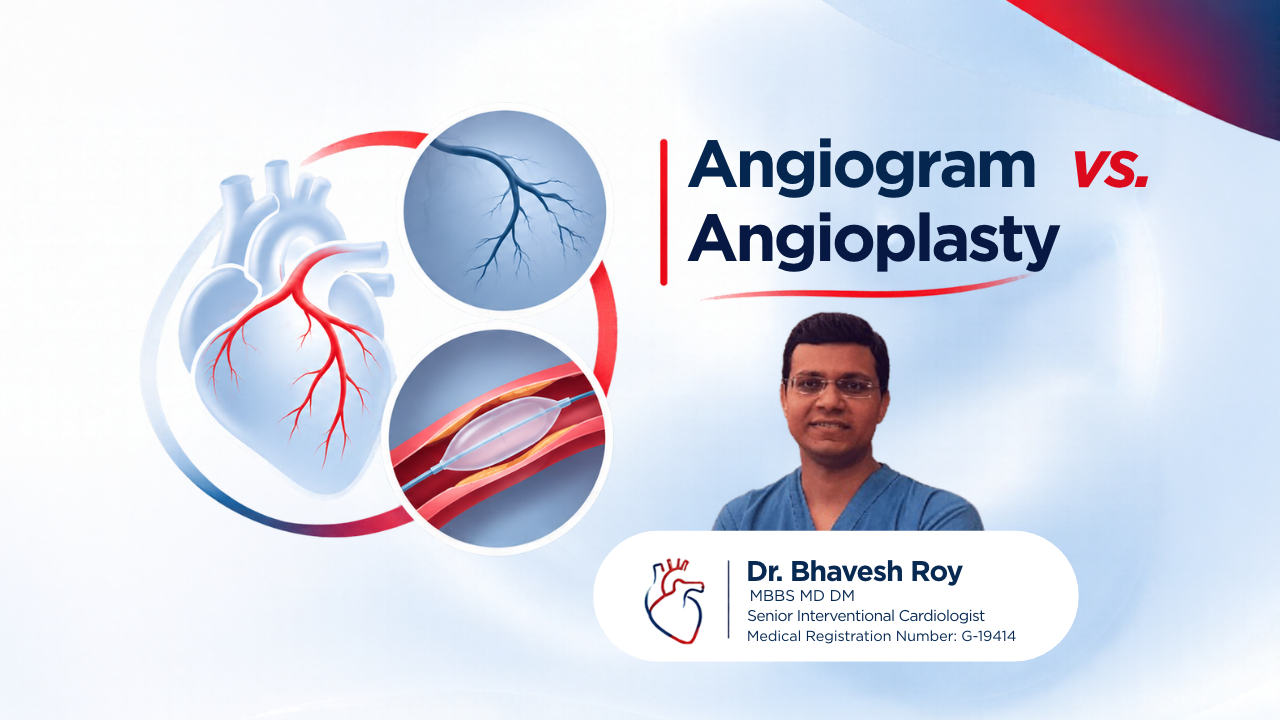
Quick Answer: The Main Difference
An angiogram acts as a diagnostic test. It finds blockages inside your heart arteries. Conversely, an angioplasty serves as a medical treatment. It actively opens those blocked arteries to restore normal blood flow. Think of an angiogram as the investigation phase. Meanwhile, view the angioplasty as the actual repair work. Often, cardiologists perform both procedures consecutively during the exact same hospital visit.
Introduction: Navigating Heart Procedures
When you experience chest pain, your doctor might mention several unfamiliar medical terms. Specifically, patients often confuse the terms “angiogram” and “angioplasty.” Since they sound very similar, this confusion happens frequently. However, these two procedures serve entirely different medical purposes.
Therefore, understanding the contrast between them empowers you as a patient. This article explains the clear differences. Furthermore, it helps you understand exactly what to expect if your cardiologist recommends either procedure.
Table of Contents
- What Is a Coronary Angiogram?
- What Is a Coronary Angioplasty?
- Angiogram vs. Angioplasty: The Main Differences
- Do They Always Happen Together?
- Frequently Asked Questions
What Is a Coronary Angiogram?
A coronary angiogram serves as a diagnostic imaging test. It helps doctors see directly inside your coronary arteries. Medical professionals use this test to check for fatty plaque buildup.
The Investigation Phase
During this procedure, the cardiologist inserts a thin tube (catheter) into a specific artery. They usually use an artery in your wrist or groin. Next, they inject a special contrast dye through this tube. This dye makes your blood vessels highly visible on an X-ray screen.
Why Doctors Perform It
Essentially, an angiogram answers a crucial diagnostic question. It tells the doctor exactly where the blockage exists and how severe it is. However, it does not fix the problem. It solely provides the necessary visual information.
What Is a Coronary Angioplasty?
While an angiogram diagnoses the problem, a coronary angioplasty actually treats it. Medical professionals also call this procedure a Percutaneous Coronary Intervention (PCI).
The Treatment Phase
If the angiogram reveals a severe blockage, the doctor might proceed directly to an angioplasty. First, they guide a deflated balloon through the catheter to the blocked area. Then, they carefully inflate this balloon. This inflation pushes the fatty plaque firmly against the artery walls. Consequently, it instantly widens the vessel.
Placing the Stent
Usually, the cardiologist also places a tiny wire mesh tube inside the artery. Doctors call this device a stent. The stent remains there permanently. As a result, it keeps the artery open and prevents it from narrowing again in the future.
Angiogram vs. Angioplasty: The Main Differences
Here is a simple breakdown of the main differences between these two medical interventions.
| Feature | Coronary Angiogram | Coronary Angioplasty |
|---|---|---|
| Primary Purpose | Diagnosis (finding the problem). | Treatment (fixing the problem). |
| Medical Action | Taking detailed X-ray pictures. | Opening the blocked artery physically. |
| Tools Used | Contrast dye and X-ray camera. | Medical balloon and wire stent. |
| Sequence Timing | Always happens first. | Happens only if the doctor finds a severe blockage. |
Do They Always Happen Together?
Patients frequently ask if they must undergo both procedures. The answer depends entirely on your specific test results.
When Only an Angiogram Happens
Sometimes, the angiogram shows completely healthy, clear arteries. In this fortunate case, the procedure ends immediately. Alternatively, the blockages might appear too severe or widespread for stents. If so, the doctor will stop the procedure. They will likely recommend bypass surgery instead.
When Both Happen Together
Often, the doctor finds a suitable blockage during the initial angiogram. If you gave prior medical consent, they will perform the angioplasty right away. This streamlined approach saves you from needing a second invasive procedure on a different day.
Frequently Asked Questions
- 1. Is an angioplasty a major open-heart surgery?
- No. It remains a minimally invasive procedure. The doctor works entirely through a small puncture in your wrist or groin. Therefore, you do not need large incisions or general anesthesia.
- 2. How long does recovery take?
- You must rest for a few hours immediately after the procedure. Most patients return to their normal daily activities within a week. Always follow your specific hospital discharge instructions.
- 3. Are you awake during these procedures?
- Yes. You remain awake but comfortably relaxed. The doctor uses local numbing medicine, so you do not feel sharp pain at the insertion site.
- 4. How long does a stent last?
- A stent stays in your artery permanently. However, you must take prescribed medicines consistently. You must also maintain a healthy lifestyle to prevent new blockages from forming elsewhere.
Diagnostic and Treatment Services Information
Dr. Bhavesh Roy provides cardiovascular diagnostic and interventional services. He performs these procedures under standardized clinical protocols upon medical referral. In accordance with ethical guidelines, clinical establishments may communicate objective and verifiable particulars concerning their facilities without patient solicitation or inducement.
MBBS, MD (Internal Medicine), DM (Cardiology)
Senior Interventional Cardiologist
Gujarat Medical Council Reg. No.: G-19414
Current Affiliation: Zydus Hospital, Ahmedabad
In compliance with National Medical Commission guidelines, clinical establishments and Registered Medical Practitioners publishing electronic media posts must transparently disclose the practitioner’s name, qualifications, registration status, and State Medical Register (SMR) or National Medical Register (NMR) number. This educational material serves public awareness. It does not promote personal practice, solicit patients, or make unverifiable medical claims.
By Dr. Bhavesh Roy
Qualifications: MBBS, MD (Internal Medicine), DM (Cardiology)
Registration Status: Senior Interventional Cardiologist
SMR Registration Number: G-19414 (Gujarat Medical Council)
Medical Disclaimer
This article provides general educational information and is not a substitute for individual medical advice, clinical diagnosis, or prescribed treatment. Palpitations, dizziness, and heart rhythm changes can have different causes, and assessment should take individual symptoms and medical history into account. Do not change or stop prescribed medication based on this article. If you experience sudden fainting, severe chest pain, extreme shortness of breath, or a sustained racing heartbeat accompanied by dizziness, seek emergency medical care immediately.