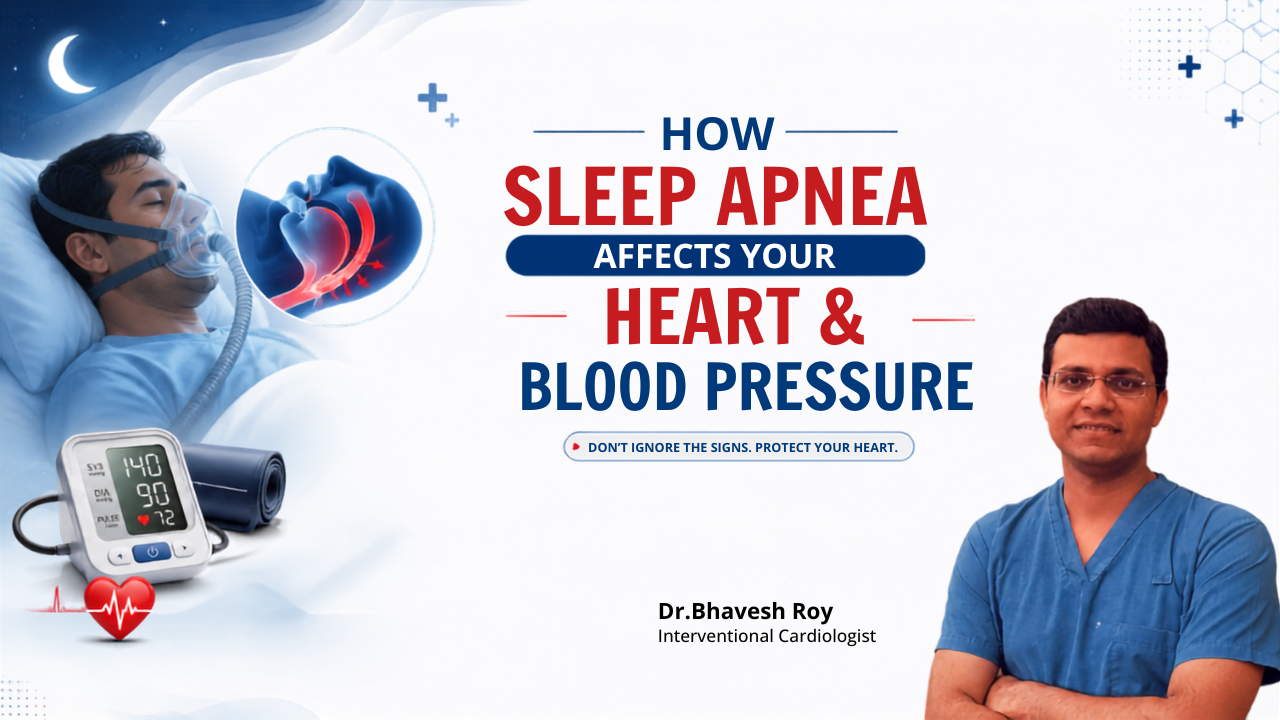
Quick Summary
Many people consider loud snoring merely an annoying habit. However, it often signals a dangerous condition called obstructive sleep apnea. Specifically, this sleep disorder repeatedly stops your breathing overnight.
Consequently, your brain panics and releases stress hormones instantly. Therefore, your blood pressure spikes dangerously high. Ultimately, untreated sleep apnea severely damages your cardiovascular system over time. Read on to protect your heart today.
Introduction: The Hidden Nighttime Threat
You might think you sleep peacefully every single night. However, your body might fight a hidden battle for oxygen. Specifically, sleep apnea causes your airway to collapse repeatedly. Consequently, your breathing stops completely for several seconds.
Therefore, this condition severely traumatizes your cardiovascular system. Furthermore, many patients never realize they have this dangerous issue. Ultimately, Dr. Bhavesh Roy wants you to understand this silent cardiac threat.
Below, we explain exactly how this sleep disorder destroys heart health. We detail the warning signs and discuss highly effective treatments.
Table of Contents
- What Exactly Happens During Sleep Apnea?
- The Direct Link to High Blood Pressure
- Triggering Dangerous Heart Arrhythmias
- Recognizing the Critical Warning Signs
- Effective Treatments for Your Heart
- Frequently Asked Questions
What Exactly Happens During Sleep Apnea?
First, your throat muscles relax too much during deep sleep. Consequently, your airway narrows or closes completely. Doctors call this condition obstructive sleep apnea. Therefore, oxygen levels in your blood drop rapidly.
Specifically, the soft tissue in the back of your throat collapses inward. Furthermore, this physical blockage traps air completely. Consequently, your lungs struggle desperately to pull oxygen inside. Therefore, your vital organs begin starving for oxygen.
Next, your brain senses this dangerous suffocation immediately. It forces you to wake up briefly to gasp for air. Ultimately, this chaotic cycle repeats dozens of times every single hour. Consequently, you never achieve deep, restorative sleep.
Furthermore, this constant waking prevents your body from healing overnight. Therefore, you wake up feeling completely exhausted every single morning. Ultimately, this intense nighttime struggle destroys your overall well-being.
The Direct Link to High Blood Pressure
Furthermore, these repeated oxygen drops trigger a massive stress response. Specifically, your brain floods your bloodstream with adrenaline. Consequently, this sudden adrenaline surge severely constricts your blood vessels.
Therefore, your blood pressure skyrockets dangerously high overnight. Next, your nervous system remains trapped in a hyperactive state. Specifically, your body believes you are constantly facing physical danger. Consequently, this hypertension persists even after you wake up.
Therefore, you carry this dangerous vascular stress throughout the entire day. Ultimately, sleep apnea is a leading cause of resistant high blood pressure. Consequently, traditional blood pressure medications alone often fail completely.
Furthermore, your arteries become stiff and severely damaged over time. Therefore, untreated patients face a massive risk of sudden vascular emergencies. Ultimately, fixing your nighttime breathing helps normalize these dangerous pressure spikes.
Triggering Dangerous Heart Arrhythmias
Additionally, this immense overnight stress disrupts your heart’s electrical system. Specifically, the sudden pressure changes stretch your delicate heart chambers. Consequently, you face a massive risk of developing atrial fibrillation.
Therefore, your upper heart chambers begin quivering erratically. Furthermore, this chaotic rhythm allows dangerous blood clots to form inside. Consequently, this erratic heartbeat drastically increases your risk of a massive stroke.
Next, the severe oxygen drops damage your cardiac muscle cells directly. Therefore, your heart never gets the restful recovery it desperately needs. Ultimately, untreated patients face much higher risks of sudden cardiac arrest.
Furthermore, correcting these nighttime breathing issues frequently stabilizes your heart rhythm. Therefore, fixing your airway protects your electrical system permanently. Ultimately, deep sleep allows your heart rate to drop and recover.
Recognizing the Critical Warning Signs
First, loud and chronic snoring remains the most common symptom. However, not everyone who snores has sleep apnea. Specifically, you must watch for sudden gasping or choking sounds overnight.
Furthermore, your sleeping partner often witnesses these terrifying breathing pauses firsthand. Consequently, extreme daytime fatigue acts as another major red flag. Therefore, you might fall asleep during normal, everyday daily activities.
Specifically, many patients struggle to stay awake while driving a car. Furthermore, frequent morning headaches also indicate severe nighttime oxygen deprivation. Consequently, your brain struggles to function properly during the day.
Therefore, you might experience severe mood swings or sudden memory loss. Ultimately, you must discuss these exact symptoms with your doctor immediately. Early detection absolutely prevents long-term damage to your cardiovascular system.
Effective Treatments for Your Heart
Fortunately, treating this condition rapidly improves your overall cardiovascular health. Specifically, a CPAP machine keeps your airway open using mild air pressure. Consequently, your blood oxygen levels remain perfectly stable overnight.
Therefore, your brain stops flooding your body with harmful stress hormones. Next, your blood pressure drops significantly within just a few short weeks. Furthermore, this continuous airflow gives your heart a massive physical break.
Consequently, your cardiac muscle finally rests and recovers properly during sleep. Additionally, targeted weight loss heavily reduces airway obstruction in many patients. Therefore, losing just ten pounds dramatically improves your nighttime breathing.
Ultimately, proper treatment literally saves your heart from premature failure. Consequently, you will experience massive improvements in your daily energy levels. Therefore, do not hesitate to seek a proper sleep evaluation.
Frequently Asked Questions
- Can sleep apnea cause a heart attack?
Yes, absolutely. The severe oxygen deprivation drastically increases your heart attack risk. Furthermore, it places immense mechanical strain on your heart muscle. - Will treating sleep apnea lower my blood pressure?
Yes, it frequently does. Specifically, using a CPAP machine reliably lowers resistant hypertension. Therefore, your heart works much less forcefully during the day. - How do I know if I stop breathing at night?
Often, a sleeping partner notices the loud gasping first. Alternatively, doctors use an overnight sleep study to diagnose it accurately. - Does weight affect sleep apnea?
Yes, absolutely. Excess neck fat places heavy physical pressure on your airway. Consequently, weight loss frequently improves or cures the condition entirely.
In conclusion, ignoring loud snoring puts your heart in severe danger. Specifically, untreated obstructive sleep apnea quietly ruins your cardiovascular system. Therefore, you must address severe daytime fatigue and gasping immediately. Ultimately, restoring your sleep quality protects your heart for decades.
Consult Dr. Bhavesh Roy Today
Are you struggling with resistant high blood pressure or severe fatigue? If so, schedule a comprehensive cardiovascular evaluation today. Specifically, Dr. Bhavesh Roy specializes in identifying hidden cardiac risk factors. Together, we will protect your heart and improve your quality of life.
Please note, this article provides educational information only. It never replaces professional medical advice, diagnosis, or treatment. Always follow the specific advice of your treating cardiologist. Furthermore, seek immediate emergency medical attention for severe chest pain, shortness of breath, or sudden fainting.