Quick Summary
Many patients struggle with a leaking heart valve called mitral regurgitation. Previously, open-heart surgery was the only option. Fortunately, modern cardiology offers brilliant minimally invasive solutions. Specifically, MitraClip repairs your existing valve using a tiny clip. Conversely, TMVR completely replaces the diseased valve without major surgery. Ultimately, both transcatheter therapies ensure rapid recovery times. Therefore, you can avoid prolonged hospital stays completely. Read on to discover which cutting-edge treatment fits your specific heart condition perfectly.
Introduction: Fixing Your Leaky Valve
Your mitral valve acts like a vital door inside your heart. Specifically, it keeps oxygen-rich blood flowing in the correct direction. However, this door sometimes fails to close tightly. Consequently, blood flows backwards into your lungs with every beat. Doctors call this dangerous condition mitral regurgitation. Therefore, it causes extreme fatigue and severe shortness of breath.
Over time, the extra workload stretches your heart muscle dangerously. If left untreated, it inevitably triggers dangerous heart failure. Historically, repairing this valve required invasive open-heart surgery. Surgeons had to stop the heart entirely during the procedure. Today, we can fix the problem through a tiny puncture in your leg. Furthermore, we use advanced catheter-based therapies to navigate safely to your heart. The two most popular procedures are MitraClip and TMVR. Below, we break down exactly how these revolutionary treatments differ.
Table of Contents
- Recognizing the Symptoms of Mitral Regurgitation
- What is MitraClip?
- What is TMVR?
- Key Differences: Repair vs. Replacement
- The Recovery Process: What to Expect
- Which Procedure is Right for You?
- Frequently Asked Questions
Recognizing the Symptoms of Mitral Regurgitation
First, you must understand the warning signs of a failing valve. Many patients dismiss early symptoms as normal signs of aging. However, a leaking valve causes distinct physical changes over time. Specifically, you might experience sudden shortness of breath during light exercise.
Eventually, you might struggle to breathe while simply lying flat in bed. Furthermore, severe swelling often appears in your legs and ankles. Consequently, you might feel completely exhausted after completing simple daily tasks. Some patients even experience a rapid, fluttering heartbeat called palpitations. Other individuals notice a lingering, dry cough that never resolves. Therefore, you must never ignore these critical cardiovascular red flags. Ultimately, early detection prevents irreversible damage to your heart muscle.
What is MitraClip?
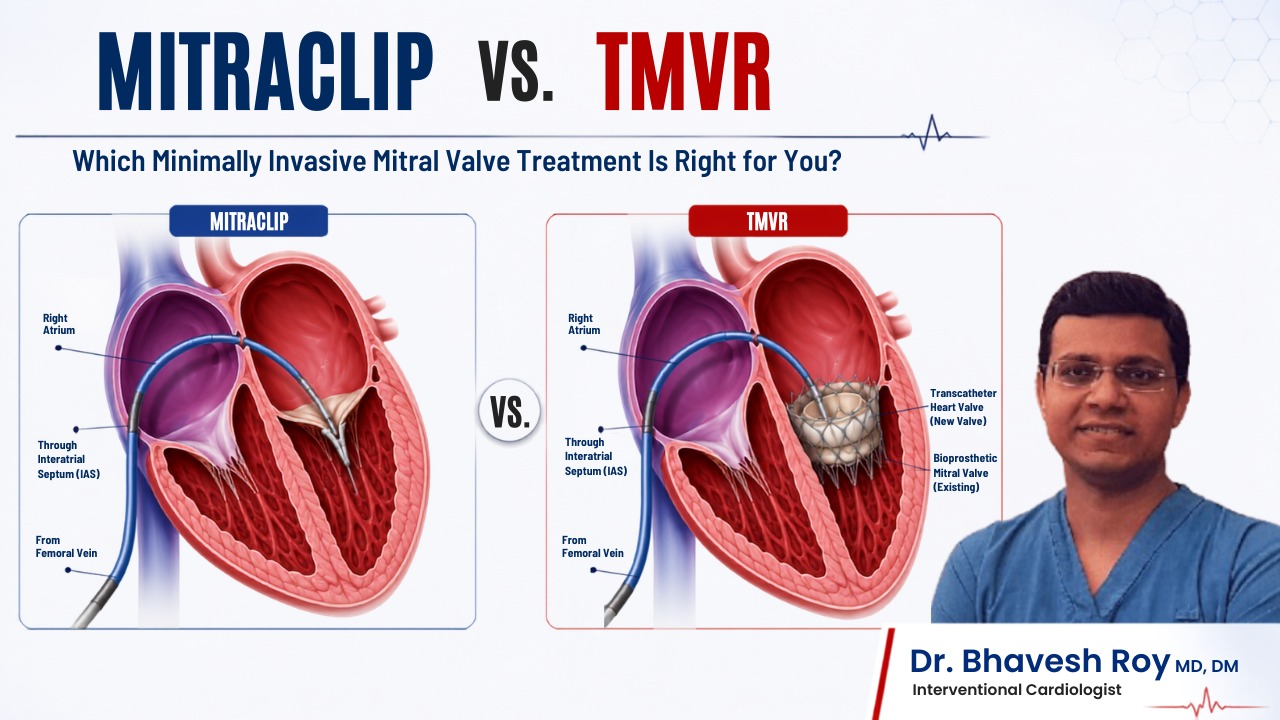
Now, let us explore the MitraClip procedure in detail. This device offers a highly effective transcatheter mitral valve repair. Specifically, your cardiologist inserts a small tube into your leg vein. Next, they guide a tiny, clothes-pin-like clip up into your heart. Throughout the procedure, doctors use advanced ultrasound imaging for perfect visibility.
They attach this clip directly to the fluttering leaflets of your mitral valve. Consequently, the clip holds the flaps together tightly. Therefore, it drastically reduces the dangerous backflow of blood instantly. Importantly, this procedure leaves your natural heart valve completely in place. It simply creates a double-barrel opening for the blood to pass through. Ultimately, it repairs the mechanical issue without removing any native tissue.
What is TMVR?
Conversely, TMVR stands for Transcatheter Mitral Valve Replacement. Sometimes, a native valve is simply too damaged for a simple clip repair. In these severe cases, we must replace the door entirely. Fortunately, TMVR accomplishes this without opening your chest cavity.
Specifically, we compress a brand-new artificial valve into a catheter. We carefully navigate this delivery system up into your beating heart. We deliver this new valve directly inside your old, diseased valve. Consequently, the artificial valve expands and immediately takes over the pumping work. It pushes the old, damaged leaflets out of the way permanently. Therefore, it completely cures the mitral regurgitation on the spot.
Key Differences: Repair vs. Replacement
Understanding the core difference between these two treatments is absolutely crucial. First, MitraClip simply repairs your existing natural anatomy. Furthermore, it is currently the most widely used minimally invasive mitral treatment globally. Doctors prefer clipping when the valve leaflets remain relatively pliable and soft.
Conversely, TMVR involves implanting a completely new prosthetic valve. Specifically, TMVR is generally reserved for heavily calcified or severely degraded valves. Hardened calcium deposits make gripping the leaflets with a clip impossible. Therefore, we often choose replacement when clipping simply will not hold. Additionally, both procedures use very similar catheter delivery systems. Consequently, both avoid the massive trauma associated with traditional open-heart surgery.
The Recovery Process: What to Expect
Recovery from minimally invasive heart procedures is remarkably fast. First, you completely avoid having your breastbone cut open. Consequently, you experience significantly less pain during the healing process. Most patients spend only one or two nights in the hospital.
Furthermore, you will walk independently within hours of the procedure. Therefore, your risk of hospital-acquired infections drops drastically. Your medical team will prescribe specific blood thinners to prevent blood clots. Next, patients typically resume normal, light activities within one week. However, you must avoid heavy lifting for about thirty days. Your doctor will schedule a follow-up ultrasound to verify the valve function. Ultimately, both options immediately improve your energy levels and breathing capacity.
Which Procedure is Right for You?
Only an experienced interventional cardiologist can determine the perfect treatment path. First, we perform a detailed echocardiogram to map your heart. Specifically, we must analyze the exact shape and thickness of your valve. We evaluate the exact direction and severity of the blood leak.
If your valve leaflets are relatively healthy, MitraClip is often ideal. However, if the valve ring is heavily calcified, TMVR becomes necessary. Furthermore, we carefully evaluate your age and overall surgical risk profile. Our dedicated heart team collaborates to design your personalized treatment plan. Therefore, we tailor the final decision entirely to your unique anatomy.
Frequently Asked Questions
- Are you awake during the procedure?
No, both procedures require general anaesthesia for your absolute safety. However, they do not require a heart-lung bypass machine. - How long does the MitraClip procedure take?
Typically, the entire clipping process takes about two to three hours. Consequently, it is much faster than traditional surgical options. - Does TMVR last as long as open-heart surgery?
Current clinical data shows excellent long-term durability for these artificial valves. Furthermore, researchers continue tracking replacement lifespans with very promising results. - Is there pain after the procedure?
You might feel slight tenderness at the small leg puncture site. However, you will completely avoid the severe chest pain of traditional surgery. - Can anyone get TMVR?
Currently, TMVR is primarily reserved for high-risk surgical patients. Specifically, your doctor will evaluate your overall health to ensure eligibility.
In conclusion, modern cardiology has revolutionized how we treat leaky valves. Specifically, both MitraClip and TMVR offer phenomenal, life-saving results. Therefore, you no longer need to fear the operating table. These advanced therapies provide a brilliant alternative for high-risk patients. Consequently, do not let severe breathlessness ruin your quality of life. Ultimately, a quick evaluation can set you on the path to rapid recovery.
Consult Dr. Bhavesh Roy Today
Are you suffering from unexplained fatigue or a known heart murmur? If so, schedule a comprehensive structural heart evaluation today. Specifically, Dr. Bhavesh Roy specializes in advanced minimally invasive cardiac interventions. We utilize state-of-the-art imaging technology to map your heart accurately. Together, we will find the perfect solution for your heart health.
Please note, this article provides educational information only. It never replaces professional medical advice, diagnosis, or treatment. Always follow the specific advice of your treating cardiologist. Furthermore, seek immediate emergency medical attention for severe chest pain, shortness of breath, or sudden fainting.