Quick Answer: What Is a Head-Up Tilt Test (HUTT)?
A Head-Up Tilt Test (HUTT), also called a tilt-table test, is a diagnostic procedure that helps healthcare professionals investigate certain causes of fainting (syncope), lightheadedness and other symptoms related to changes in body position.
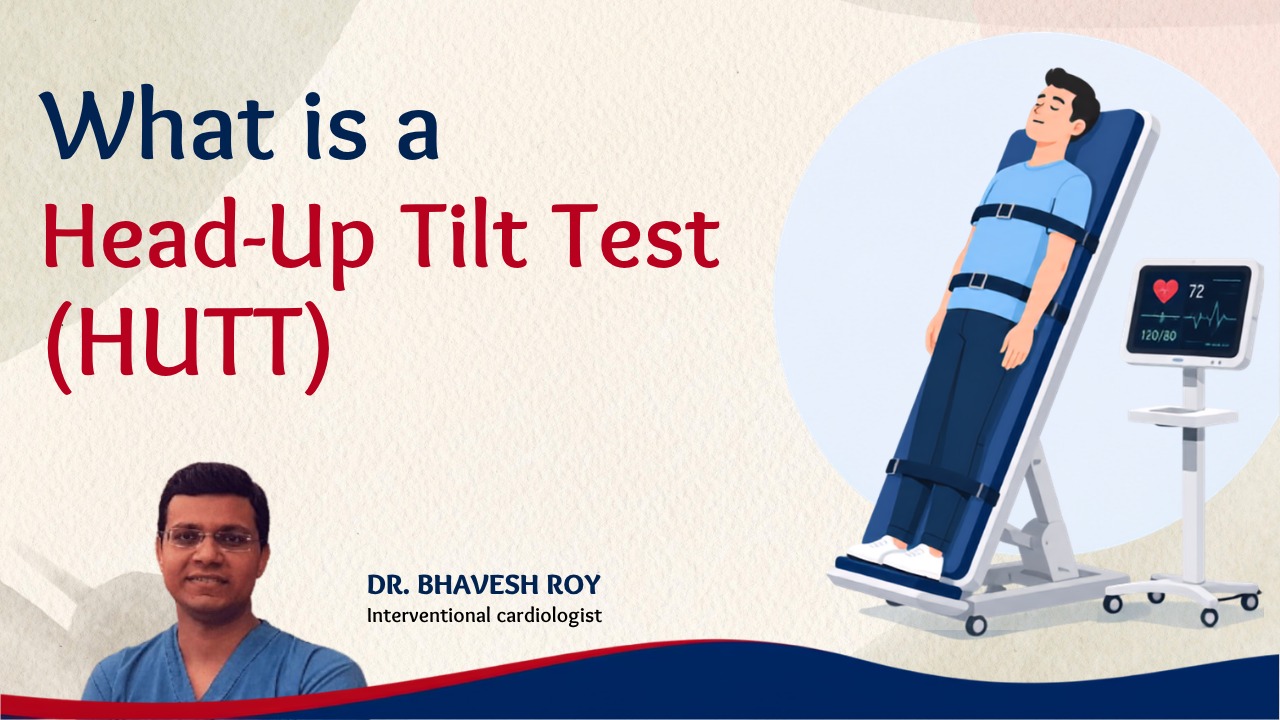
During the test, you lie on a specialised table that gradually tilts you into an upright position. Your heart rate and blood pressure are monitored to assess how your body responds to this change in posture.
The test may help clinicians investigate conditions such as reflex (vasovagal) syncope and orthostatic intolerance, including orthostatic hypotension and postural orthostatic tachycardia syndrome (POTS), when clinically appropriate.
A HUTT does not identify every cause of fainting, and its results must be interpreted alongside your medical history, symptoms, physical examination and other relevant test results.
Introduction: Understanding Unexplained Fainting
Fainting, medically known as syncope, is a temporary loss of consciousness caused by a reduction in blood flow to the brain. It is often followed by spontaneous recovery, although the underlying cause can vary considerably between individuals.
Some people experience warning symptoms before fainting, such as dizziness, nausea, sweating, blurred vision or a feeling of weakness. These symptoms can occur when blood pressure, heart rate or the body’s normal responses to changes in posture do not maintain adequate blood flow to the brain.
Fainting can have several causes, including reflex syncope, orthostatic hypotension, heart rhythm disturbances and other medical conditions. A medical assessment generally begins with a detailed history, physical examination, blood pressure measurements and an electrocardiogram (ECG) when indicated.
When the cause remains uncertain and a positional or reflex mechanism is suspected, a healthcare professional may consider a Head-Up Tilt Test. The purpose is to observe changes in heart rate, blood pressure and symptoms under controlled conditions. The test is one component of a broader diagnostic assessment rather than a standalone answer for every fainting episode.
Table of Contents
- How Does the Tilt Table Test Work?
- Why Is the HUTT Useful?
- What to Expect During Your Procedure
- Is the Procedure Safe?
- Frequently Asked Questions
How Does the Tilt Table Test Work?
When a person moves from lying down to standing, gravity causes some blood to shift towards the lower body. The nervous system and cardiovascular system normally respond by adjusting blood vessel tone and heart rate to help maintain blood pressure and adequate blood flow to the brain.
In some people, these adjustments do not work as expected. Blood pressure may fall, heart rate may change substantially, or the body’s reflex responses may contribute to dizziness or fainting.
A Head-Up Tilt Test allows the clinical team to assess these responses while the person moves from a lying position to a supported, upright position.
During the test, the team monitors heart rate and blood pressure and observes whether symptoms occur. The timing of symptoms in relation to these measurements can help clinicians assess whether a reflex or postural mechanism may be contributing to the problem.
Some people may experience a drop in blood pressure, a change in heart rate, dizziness or fainting during the procedure. Others may complete the test without reproducing their usual symptoms.
A positive result does not automatically establish the cause of every spontaneous fainting episode, and a negative result does not rule out every possible cause. Results must be interpreted alongside the person’s clinical history and other findings.
Why Is the HUTT Useful?
A Head-Up Tilt Test may help evaluate selected people who experience unexplained fainting, recurrent lightheadedness or symptoms associated with standing. Whether it is appropriate depends on the suspected cause and the findings of the initial clinical assessment.
The test can be useful when a healthcare professional is investigating the following conditions:
- Vasovagal Syncope: Also called reflex syncope, this occurs when a reflex response causes blood pressure and sometimes heart rate to fall, temporarily reducing blood flow to the brain. Episodes may be associated with prolonged standing, heat, pain or emotional triggers. A tilt-table test may help reproduce symptoms and support the clinical assessment when the diagnosis remains uncertain.
- Postural Orthostatic Tachycardia Syndrome (POTS): POTS involves an excessive increase in heart rate after moving into an upright position, together with symptoms of orthostatic intolerance. A clinician may use a tilt-table test or other appropriate measurements to assess changes in heart rate and blood pressure. The diagnosis requires established clinical criteria; a heart rate increase during a single test is not sufficient on its own.
- Orthostatic Hypotension: This condition involves an abnormal fall in blood pressure after standing. It may cause lightheadedness, weakness, blurred vision or fainting. Evaluation may include lying and standing blood pressure measurements, with tilt testing considered when further assessment is needed.
The HUTT is not necessary for every person who faints. The appropriate investigation depends on the suspected cause, the person’s clinical history, potential cardiac risk factors and the results of the initial assessment.
What to Expect During Your Procedure
Understanding the steps involved in a tilt-table test may help you know what to expect. The exact procedure, duration and preparation instructions vary between healthcare facilities and testing protocols.
Preparation and Setup
Before the test, the healthcare team will explain the procedure and provide instructions about preparation. Depending on the facility’s protocol, you may receive instructions about food, drinks, caffeine, smoking and medications.
Do not stop or change prescribed medications on your own. Tell the team about all medicines you take, your medical history, any allergies and previous fainting episodes. Follow the testing facility’s specific instructions about fasting and medication management.
During preparation, you will usually lie on a specialised, motorised table. Safety straps are used to help support your body while the table changes position. ECG electrodes may be attached to your chest, and blood pressure will be monitored throughout the test. Some protocols also use continuous blood pressure monitoring through a finger sensor.
The Tilting Phase
Once the initial measurements have been recorded, the table is gradually tilted into an upright position, commonly at an angle of approximately 60 to 80 degrees, depending on the protocol.
You remain supported by the table while the clinical team monitors your heart rhythm, blood pressure and symptoms. The initial upright phase may last around 20 to 45 minutes, although the exact duration varies with the clinical indication and testing protocol.
During the test, tell the team if you experience dizziness, nausea, sweating, blurred vision, weakness, palpitations or any symptoms similar to your usual episodes.
If the initial phase does not reproduce symptoms or provide enough information, the team may consider a medication-assisted phase under the prescribed protocol. Medicines such as nitroglycerin or isoproterenol may be used in selected cases. The choice of medication and the duration of monitoring depend on the facility’s procedure and your clinical circumstances.
Symptom Monitoring and Recovery
The test findings are interpreted by considering changes in heart rate and blood pressure alongside the symptoms that occur. Reproducing a person’s usual symptoms with a corresponding physiological response may support a suspected diagnosis, but the results must be considered in the context of the full clinical assessment.
If you develop significant symptoms or faint during the procedure, the team can return the table to a horizontal position and assess your recovery. Heart rate and blood pressure will continue to be monitored as needed.
After the test, the staff will advise you about recovery, any further observation and whether you can resume your usual activities. The overall appointment may take longer than the tilting phase because preparation and recovery time are also required.
Is the Procedure Safe?
A Head-Up Tilt Test is generally considered safe when performed by trained healthcare professionals in an appropriate clinical setting. However, as with any medical procedure, it can cause symptoms or complications.
The test is designed to assess how your body responds to an upright position, so dizziness, lightheadedness, nausea, sweating or fainting may occur during the procedure. These symptoms are monitored by the clinical team, and the table can be returned to a horizontal position when needed.
Less commonly, a person may experience an irregular heartbeat or other symptoms requiring additional assessment. Medication used during some protocols may produce side effects, such as a headache or changes in heart rate or blood pressure.
Safety straps and continuous monitoring help support the person during the test, but it is not appropriate to describe any medical procedure as completely risk-free. Tell the clinical team about your symptoms and medical history, and follow their instructions throughout the test.
Before leaving, ask the team whether you need additional observation or assistance getting home. If you faint during the test or receive medication that affects how you feel, you may need someone to accompany you. Driving advice should follow the facility’s instructions and your recovery status.
Frequently Asked Questions
- 1. How should I prepare for a Head-Up Tilt Test?
- Preparation instructions vary by testing facility and protocol. You may be asked to avoid food or certain drinks for a specified period, and the team may give instructions about caffeine, smoking or medications. Tell the clinical team about your medical history and all medicines you take. Do not stop or change prescribed medication unless the healthcare professional conducting your assessment instructs you to do so.
- 2. How long does the entire test take?
- The duration varies according to the protocol, whether medication is used and how long observation is required. The upright monitoring phase may last around 20 to 45 minutes, with some protocols involving additional monitoring. The full appointment takes longer because it includes preparation and recovery. The testing facility can provide an estimate based on its procedure.
- 3. Can I drive myself home afterward?
- Whether you can drive after the test depends on your symptoms, recovery and the testing facility’s instructions. If you faint, feel dizzy or weak, or receive medication that affects your recovery, you may need someone to accompany you home. Ask the clinical team before leaving and do not drive if you are still experiencing symptoms or have been advised not to.
Key Takeaway: Understanding the Head-Up Tilt Test
A Head-Up Tilt Test helps clinicians assess how heart rate and blood pressure respond to changes in body position. It may be useful when investigating selected cases of unexplained fainting or orthostatic intolerance, including suspected vasovagal syncope, orthostatic hypotension and POTS.
The test is generally safe when performed under appropriate supervision, although temporary symptoms such as dizziness or fainting can occur. Its results should be interpreted alongside medical history, physical examination and other relevant findings.
Anyone experiencing fainting should receive an appropriate assessment to help determine the possible cause. Fainting accompanied by chest pain, severe breathlessness, sustained palpitations or other concerning symptoms requires urgent medical evaluation.
Medical Disclaimer
This article provides general educational information only and is not a substitute for individual medical advice, clinical diagnosis or prescribed treatment. The suitability, preparation, procedure and interpretation of a Head-Up Tilt Test depend on the individual’s symptoms, medical history and clinical assessment. Follow the instructions provided by your healthcare team. If you experience fainting with chest pain, severe breathlessness, sustained palpitations or other symptoms that may indicate a medical emergency, seek emergency medical care.