Quick Answer
Do you wake up feeling completely exhausted despite spending eight full hours in bed? If so, you might suffer from obstructive sleep apnea (OSA). This serious medical condition causes your breathing to stop and start repeatedly throughout the night. Consequently, your blood oxygen levels drop, which places massive stress on your cardiovascular system. To accurately diagnose this hidden threat, cardiologists and sleep specialists utilize a diagnostic test called a sleep study (polysomnography). Ultimately, proper medical treatment can restore your daytime energy, lower your blood pressure, and protect your heart from long-term damage.
Introduction: The Hidden Cardiac Threat
Many people view loud snoring as nothing more than a minor nighttime annoyance for their bed partner. However, loud snoring often acts as the primary warning sign for obstructive sleep apnea. When patients visit me, they frequently complain about stubborn high blood pressure or unexplained daytime fatigue. Often, they do not realize that their poor sleep quality actively drives their heart problems. Therefore, identifying and treating sleep breathing disorders remains a critical pillar of modern preventive cardiology.
What is Obstructive Sleep Apnea (OSA)?
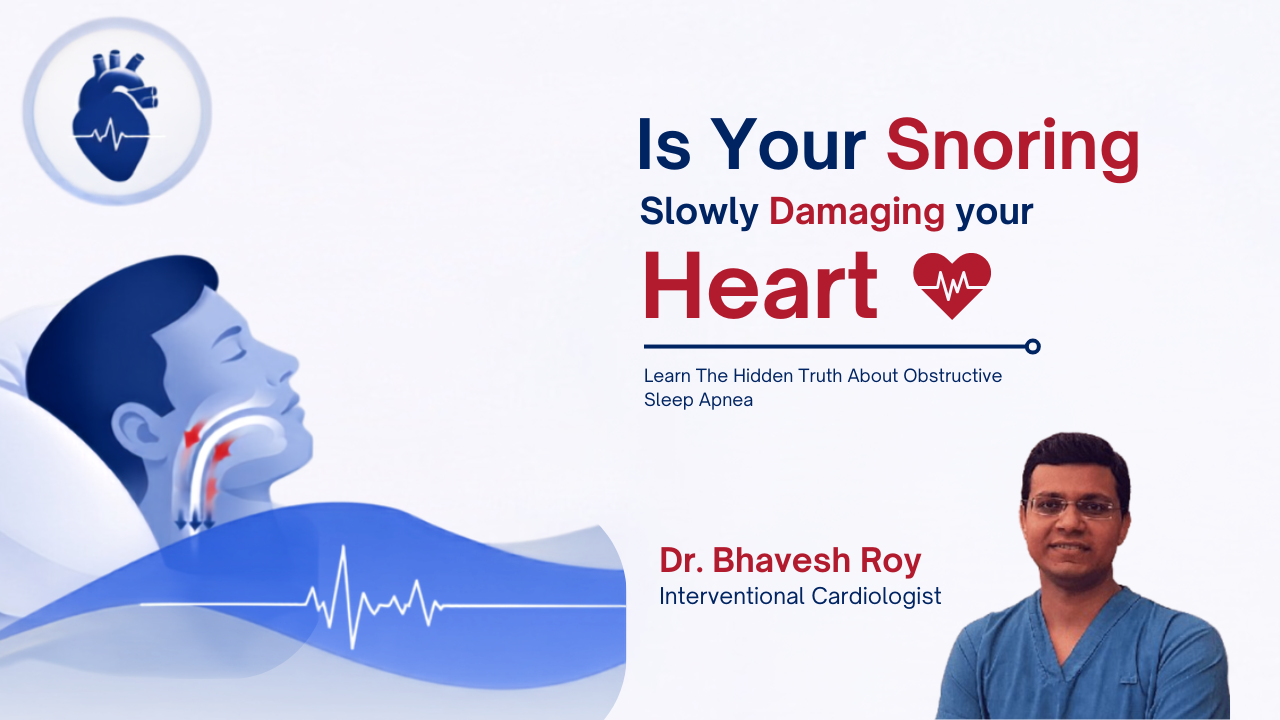
During normal sleep, air flows smoothly through your nose and mouth directly into your lungs. Unfortunately, if you have obstructive sleep apnea, the muscles in the back of your throat relax too much. As a result, these relaxed tissues collapse and physically block your upper airway. You then stop breathing completely for ten seconds or longer.
When your brain senses this dangerous drop in oxygen, it briefly wakes you up so you can consciously reopen your airway. Usually, you gasp, snore loudly, or snort, and then immediately fall back asleep. Because this vicious cycle can happen dozens of times every single hour, you never achieve deep, restorative sleep.
The Heart-Sleep Connection: Why Cardiologists Care
You might wonder why an interventional cardiologist cares so deeply about your snoring habits. The answer lies in the severe mechanical and chemical stress that sleep apnea places on your heart muscle. Every time you stop breathing, your oxygen levels plummet rapidly. Consequently, your body panics and dumps massive amounts of adrenaline into your bloodstream.
Furthermore, this adrenaline surge forces your blood pressure to spike dramatically while you sleep. Over many years, this relentless nighttime stress heavily damages your blood vessels. Indeed, untreated sleep apnea drastically increases your overall risk for hypertension, atrial fibrillation (irregular heartbeat), heart attacks, and strokes. Therefore, fixing your sleep directly protects your heart.
What is a Sleep Study?
To properly diagnose your nighttime breathing issues, doctors prescribe a sleep study. Medical professionals formally call this comprehensive test polysomnography. A sleep study safely and painlessly records your body’s physical activity while you rest.
Depending on your specific symptoms and medical history, your doctor will recommend the most appropriate testing environment. Sometimes, patients stay overnight in a specialized medical clinic, where technicians monitor them continuously. Alternatively, many patients now qualify for a Home Sleep Apnea Test, which allows them to sleep in their own bed while wearing a simplified diagnostic device. Ultimately, both methods provide vital data about your sleep architecture.
How a Sleep Study Works
Regardless of the specific setting, the equipment carefully tracks several crucial physiological parameters. First, sensitive monitors measure your airflow to see exactly how often you stop breathing. We call these breathing pauses “apneas.” Second, a finger oximeter tracks your blood oxygen levels to identify dangerous drops.
Third, chest sensors record your heart rate and rhythm to catch any dangerous nighttime arrhythmias. Finally, the test calculates your Apnea-Hypopnea Index (AHI). This specific numerical score tells your doctor exactly how many times your breathing stops per hour. Consequently, this number determines the clinical severity of your condition.
How We Use Sleep Data to Protect Your Heart
When a cardiologist refers you for a sleep evaluation, we look for very specific cardiovascular red flags. Rather than simply diagnosing a snoring problem, we use this vital data to uncover the hidden triggers behind your heart issues.
First, we carefully analyze your oxygen desaturation levels. Every time your airway collapses, your blood oxygen drops rapidly, which literally starves your heart muscle of the fuel it needs to function. Second, we closely monitor your nighttime heart rhythm. Severe sleep apnea acts as a major, well-documented trigger for dangerous arrhythmias, particularly atrial fibrillation (AFib).
Furthermore, catching these breathing pauses early allows us to tailor your cardiac medications much more effectively. Ultimately, the detailed data from your sleep study provides a clear medical roadmap. It helps us treat the actual root cause of your resistant high blood pressure, rather than simply adding more pills to your daily routine.
Warning Signs: When Should You Request a Test?
You should definitely speak to your cardiologist or primary care doctor if you experience multiple specific warning signs. For instance, loud, disruptive snoring serves as the most obvious symptom. Additionally, if your partner notices that you gasp for air or stop breathing during the night, you must take immediate action.
Furthermore, waking up with a severely dry mouth or a pounding morning headache indicates poor nighttime oxygenation. Finally, if you experience overwhelming daytime sleepiness and struggle to stay awake while driving or working, you urgently need a medical evaluation.
Effective Treatments for Obstructive Sleep Apnea
Fortunately, doctors can successfully treat this condition using several proven, highly effective methods.
For moderate to severe cases, Continuous Positive Airway Pressure (CPAP) therapy remains the gold standard of care. A CPAP machine gently blows room air through a comfortable mask, which actively keeps your airway open all night long. Consequently, this continuous pressure eliminates snoring and relieves the strain on your heart.
Additionally, targeted lifestyle changes play a massive role in your overall recovery. Losing excess body weight significantly reduces the fatty tissue surrounding your neck, which directly improves your breathing mechanics. Moreover, specialized dentists design custom oral appliances that push your lower jaw forward to physically open your throat. Thus, your doctor will help you choose the best, most comfortable option for your lifestyle.
Frequently Asked Questions
- 1. Does obstructive sleep apnea go away on its own?
- No, this structural airway condition rarely resolves without active medical intervention. However, losing significant weight can dramatically improve your symptoms. Additionally, utilizing CPAP therapy effectively manages the disease so you can sleep peacefully every night.
- 2. Can a sleep study detect heart problems?
- Yes, the testing equipment continuously monitors your heart rhythm while you sleep. Consequently, cardiologists frequently discover hidden arrhythmias, like atrial fibrillation, during a routine overnight sleep evaluation.
- 3. What happens if I ignore my sleep apnea?
- Ignoring this condition places immense, constant stress on your cardiovascular system. Ultimately, untreated patients face a drastically higher risk of developing severe high blood pressure, suffering a debilitating stroke, or experiencing a fatal heart attack. Therefore, you must take your symptoms seriously.
Protect Your Heart Today
Dr. Bhavesh Roy serves as a Senior Interventional Cardiologist with extensive experience in managing the complex relationship between sleep disorders and cardiovascular disease. He strongly believes that treating sleep apnea represents a vital step in preventing future heart attacks and strokes. Do not let poor sleep destroy your heart health. Contact his expert clinic today to schedule a comprehensive evaluation.
This article provides general educational information only. Therefore, it should never replace personalized medical advice, formal clinical diagnosis, or prescribed treatment. Sleep disorders directly affect cardiovascular health. Consequently, a qualified physician must evaluate your specific symptoms. If you experience severe chest pain, sudden breathlessness, or extreme daytime sleepiness that impairs your driving, seek urgent medical attention immediately.