Quick Summary
First, treating complex coronary artery disease requires highly advanced internal imaging. Specifically, doctors use two incredible microscopic cameras inside your beating heart today. Consequently, IVUS uses high-frequency sound waves to see deep tissue layers. However, OCT uses near-infrared laser light for absolute microscopic surface precision. Therefore, your cardiologist chooses the exact tool fitting your specific physical blockage. Ultimately, both brilliant technologies ensure your new stent fits perfectly and functions flawlessly safely.
Introduction to Advanced Cardiac Cameras
First, modern cardiology relies heavily on seeing exactly what is happening inside your blood vessels. Specifically, a standard angiogram only shows a dark 2D shadow of your flowing blood. Consequently, doctors need a much closer, 3D look to treat severe blockages perfectly. Therefore, they utilize advanced intravascular imaging tools daily.
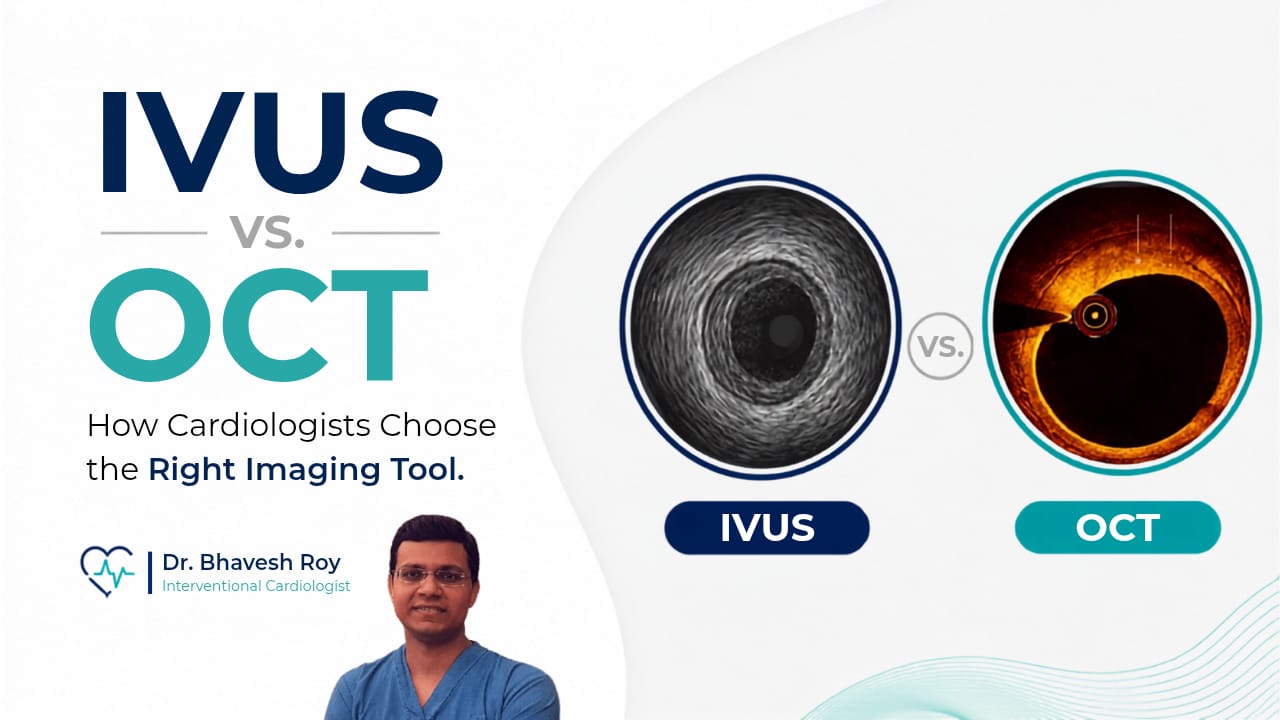
Furthermore, the two undisputed champions of internal cardiac imaging are IVUS and OCT today. Next, while they both accomplish the same ultimate goal, they function completely differently physically. Consequently, one relies on sound, while the other relies on pure laser light. Ultimately, Dr. Bhavesh Roy explains exactly how these brilliant technologies work and why doctors choose one over the other.
Table of Contents
- What is IVUS? (The Power of Sound)
- What is OCT? (The Precision of Light)
- Sound vs. Light: Key Technical Differences
- When Do Doctors Choose IVUS?
- When Do Doctors Choose OCT?
- The Patient Procedure Experience
- Frequently Asked Questions
- Conclusion
What is IVUS? (The Power of Sound)
First, IVUS stands for Intravascular Ultrasound medically today. Specifically, this technology uses the exact same principles as sonar on a submarine. Consequently, a microscopic wand emits high-frequency sound waves directly inside your blocked artery. Therefore, these sound waves penetrate deeply through the thick blood and hardened plaque.
Furthermore, the sound waves bounce off your arterial walls and return to the catheter instantly. Next, a sophisticated computer translates these echoes into a highly detailed 360-degree image. Consequently, doctors can see the entire vessel wall completely through the flowing red blood cells. Ultimately, this deep penetration makes IVUS an incredibly reliable and versatile medical tool.
What is OCT? (The Precision of Light)
First, OCT stands for Optical Coherence Tomography clinically today. Specifically, this incredible technology abandons sound entirely and uses near-infrared laser light instead. Consequently, light waves provide substantially higher resolution than any sound wave ever could. Therefore, OCT acts exactly like an optical microscope directly inside your beating heart.
Furthermore, light waves cannot see through thick red blood cells effectively. Next, the doctor must briefly flush your artery with a clear contrast dye during imaging. Consequently, this rapid flush pushes the blood away for just a few seconds. Ultimately, this allows the laser to capture breathtaking, microscopic surface details of the dangerous plaque.
Sound vs. Light: Key Technical Differences
First, understanding the basic physics reveals why doctors need both of these incredible tools today. Specifically, sound waves travel deeper, while light waves capture finer surface details perfectly.
| Feature | IVUS (Sound Waves) | OCT (Light Waves) |
|---|---|---|
| Energy Source | High-frequency Ultrasound | Near-Infrared Laser Light |
| Image Resolution | Good (Sees deep layers) | Exceptional (10x higher resolution) |
| Depth Penetration | Deep (Sees through thick plaque) | Shallow (Focuses on the inner surface) |
| Blood Clearance Needed? | No (Sees right through blood) | Yes (Requires a quick contrast flush) |
| Best Used For | Large vessels, heavy calcification depth | Microscopic detail, vulnerable plaque, perfect stent sizing |
When Do Doctors Choose IVUS?
First, cardiologists specifically choose IVUS when dealing with very large or complex blood vessels. Specifically, its deep penetration allows doctors to measure the true, outer size of the entire artery. Consequently, if a patient has extremely thick plaque, sound waves pierce right through it easily. Therefore, doctors can see exactly how far the dangerous disease extends outwardly.
Furthermore, IVUS remains the absolute preferred tool for patients with severe kidney disease. Next, since IVUS does not require extra contrast dye flushes, it protects fragile kidneys perfectly. Ultimately, it remains the most trusted, universally utilized internal imaging tool globally today.
When Do Doctors Choose OCT?
First, doctors choose OCT when absolute microscopic precision is strictly required safely. Specifically, if a doctor suspects a highly vulnerable, unstable plaque, OCT reveals it flawlessly. Consequently, the laser light shows tiny microscopic tears inside the delicate arterial lining perfectly. Therefore, doctors can treat these hidden threats before a massive heart attack occurs.
Furthermore, OCT remains completely unmatched for inspecting a newly placed stent. Next, it allows the doctor to verify that every single metal strut touches the artery wall perfectly. Consequently, this prevents dangerous blood clots from forming in tiny microscopic gaps. Ultimately, OCT provides the highest definition cardiovascular imaging currently available to humanity.
The Patient Procedure Experience
First, from your personal perspective on the operating table, both procedures feel exactly identical. Specifically, your doctor performs either test during your standard angiogram or stent procedure entirely safely. Consequently, the microscopic camera travels effortlessly through the exact same catheter in your wrist or groin. Therefore, you do not feel the sound waves or the laser light whatsoever.
Furthermore, these rapid imaging tests only add a few short minutes to your total surgery time. Next, you remain comfortably awake and heavily relaxed during the entire diagnostic process. Consequently, this brilliant technological integration provides massive, life-saving medical benefits instantly. Ultimately, your highly trained cardiologist simply chooses the best tool for your specific internal anatomy.
Frequently Asked Questions
- 1. Is one technology strictly better than the other?
- No. First, they serve completely different medical purposes entirely. Specifically, IVUS offers brilliant depth, while OCT offers unmatched surface resolution.
- 2. Will I need both IVUS and OCT during my procedure?
- Usually no. First, your cardiologist will select the single most appropriate tool for your specific blockage safely.
- 3. Are there additional physical risks with OCT because of the laser?
- No. First, the near-infrared light is completely safe and physically harmless. Specifically, the only minor difference is the requirement of an extra contrast dye flush.
- 4. Do these cameras treat the blockage themselves?
- No. First, they are strictly diagnostic imaging tools entirely. Specifically, the doctor uses standard balloons and stents to actually treat the physical blockage.
Conclusion
First, whether your doctor uses the deep power of sound or the absolute precision of light, you benefit massively. Specifically, IVUS and OCT represent the absolute pinnacle of modern cardiovascular diagnostic imaging today. Consequently, they remove all surgical guesswork and ensure your permanent stent fits flawlessly. Therefore, always seek a cardiologist who utilizes these advanced internal cameras routinely.
Furthermore, understanding how your medical care works completely removes terrifying surgical anxiety. Ultimately, combining expert medical skill with brilliant diagnostic technology guarantees the best possible long-term cardiovascular health for you.
Consult Dr. Bhavesh Roy Today
Dr. Bhavesh Roy is a highly experienced Interventional Cardiologist specializing in complex coronary procedures today. Specifically, he utilizes both IVUS and OCT routinely to ensure precise, long-lasting surgical results completely safely. Furthermore, he believes patient education remains the cornerstone of excellent cardiac care. Therefore, schedule your comprehensive cardiovascular evaluation with his expert clinic immediately.
This article provides educational information only for general public reading today. Specifically, it never replaces professional medical advice, clinical diagnosis, or formal medical treatment. Always consult a qualified cardiologist regarding your specific cardiovascular symptoms immediately and completely. Furthermore, seek immediate emergency medical care for any severe, sudden chest pain whatsoever.